How to Start Building an Email List From Zero (And Why You Should Start Today)

Learning how to start building an email list is the best decision you can make for your online income. This honest guide covers platforms, lead magnets, what to send, and how to grow from your very first subscriber.
If I could go back and change one single decision from my early days of building an online income, it would not be which niche I chose or which platform I started on.
It would be the day I started collecting email addresses.
I waited much longer than I should have. I told myself I’d set up the email list once the blog had more readers. Once I had something worthwhile to send. Once everything else was figured out. And while I was waiting, thousands of people visited my content, found it helpful, and left without any way for me to reach them again.
Learning how to start building an email list early, before you feel ready, before you have a large audience, and before you have a perfect lead magnet, is one of the best decisions you can make for your online income. This guide explains exactly how to do it.
TL;DR
- Your email list is the only audience you own outright, and it’s the most valuable asset in any online income strategy.
- You need an email platform, a simple reason for people to sign up, and a form somewhere that people can actually find.
- You do not need a website, a large audience, or a complex lead magnet to start today.
- What you send matters more than how often you send it, and the first email you send is more important than any other.
Recommended Reading:
- Things I Wish I Knew Before Trying to Make Money Online (The Lessons Nobody Shares)
- How to Start a Blog and Make Money for Beginners: A Complete Step-by-Step Guide
- How to Start Affiliate Marketing for Beginners: A Complete Step-by-Step Guide
- 50+ Legit Ways to Make Extra Money Online in 2026 (Real Opportunities That Pay)
An Email List Is Only Part of the Puzzle
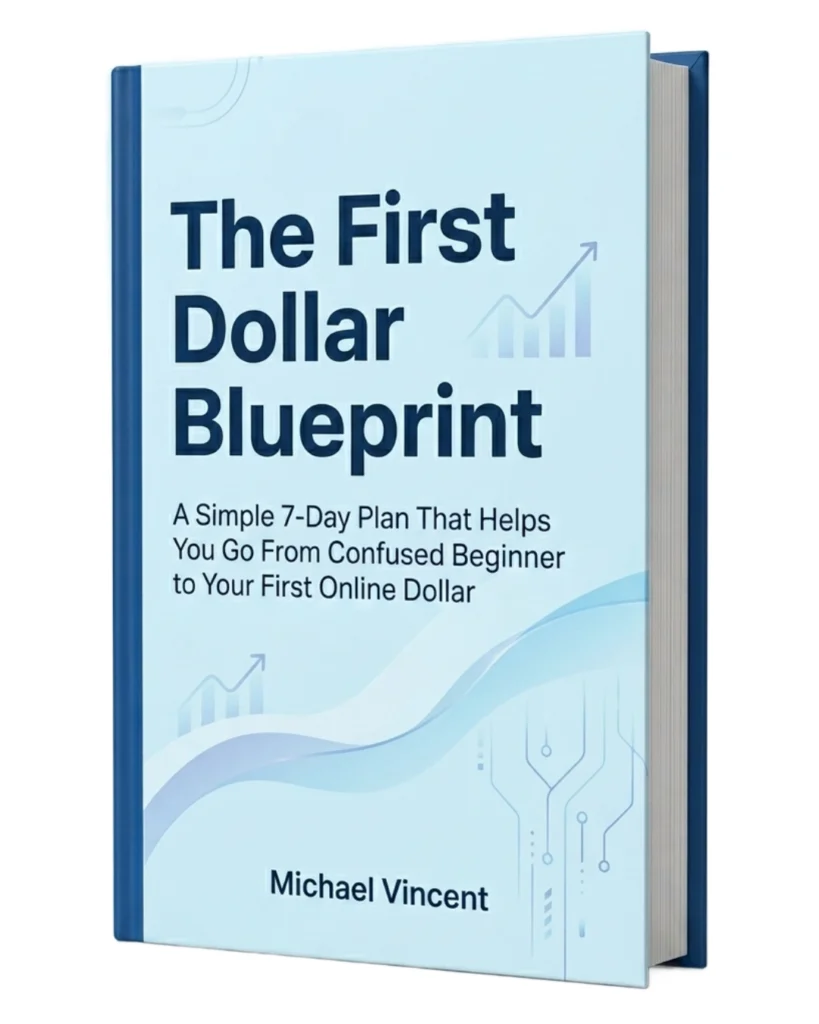
A growing email list gives you an audience, but it doesn’t automatically create income. If you’re wondering what comes after building that list, I put together The First Dollar Blueprint to help beginners take the next steps with a simple 7-day action plan focused on turning effort into actual earnings.
Why Your Email List Is the Most Important Thing You Can Build Online
There’s a phrase that gets used a lot in online business circles: “build on rented land.”
What it means is this. When you grow a social media following, you are building an audience on a platform you don’t own, according to rules that change without your input, through an algorithm that decides which of your followers even see what you post.
Instagram can reduce your organic reach. TikTok can restrict your account. A platform can change its entire structure overnight, and everything you built on it becomes significantly less effective.
I watched this happen to creators I knew when organic reach on Facebook dropped dramatically a few years ago. Accounts with tens of thousands of followers suddenly saw their posts reaching a few hundred people. The audience was still there. The platform had simply decided to show them less of what they followed.
An email list is completely different.
When someone gives you their email address, you have a direct, unmediated line of communication with them that no algorithm controls.
You send an email, and it arrives in their inbox. Not on a feed where it competes with every other piece of content. Not on a platform where your reach depends on engagement signals. Directly in the inbox of someone who deliberately chose to hear from you.
That directness is worth an enormous amount. It’s why the same recommendation made to an email list converts at a significantly higher rate than the same recommendation made on social media. Your email subscribers are not passive scrollers. They are people who raised their hand and said “yes, I want to hear what this person has to say.”
And here is the specific thing I wish someone had said to me clearly very early on: the email list is not a tool you use alongside your online income strategy.
For most successful online income earners, it is the income strategy. Everything else, the blog, the social media, the YouTube channel, serves to bring people to the list, and the list is where the actual relationship and conversion happens.
How to Start Building an Email List: Your First Three Steps
Most beginners make this more complicated than it needs to be, and that complexity is what keeps them from starting.
Here are the three actual steps, in order, with no unnecessary complexity added.
Step one: Choose an email platform and create a free account. This takes twenty minutes. The platform gives you the technical infrastructure to collect email addresses, store them, and send to them. You don’t need to pay anything to start. Most beginners can get started without spending any money.
- Beehiiv — Best for newsletter growth and monetization
- Moosend — Best for affordable email automation
- Systeme.io — Best all-in-one platform for beginners
- Omnisend — Best for e-commerce stores
- Mailchimp — Best for simple email marketing
- Kit (formerly ConvertKit) — Best for content creators
- AWeber — Best for bloggers
- ActiveCampaign — Best for advanced automation
- GetResponse — Best for webinar marketing
- MailerLite — Best customer support
- Sender — Best for generous free plans
- HubSpot — Best for larger businesses and enterprise users
Don’t get stuck trying to choose the perfect platform. The most important thing is to start building your email list. You can always switch platforms later as your audience grows and your needs change.
Step two: Create a simple signup form. Your email platform generates this for you. You write a short line or two explaining what people will receive when they sign up, and the form captures their name and email address.
Step three: Put that form somewhere a real person can find it. Your website, your social media bio, your Beehiiv page. Somewhere visible.
That’s the foundation. Every other email list-building tactic, lead magnets, welcome sequences, and growth strategies sit on top of that foundation. But the foundation itself is genuinely simple, and you can have it in place today.
The Best Email Platforms for Beginners (And My Honest Opinion on Each)
There are many email platforms available and the choice feels complicated when you first encounter it. Here’s my honest take on the ones most relevant to beginners.
1. Beehiiv: Best for newsletter growth and monetization

Beehiiv is where I would point most beginners today, and I say that without reservation.
It was built specifically for newsletter creators who want to grow a list and eventually monetize it through a combination of paid subscriptions, recommendations, and advertising. The free plan is genuinely capable. The interface is clean and pleasant to use.
The publishing experience makes sending a newsletter feel like an intentional content creation act rather than a technical task.
A big strength of Beehiiv is how it supports growth from day one. The platform includes built-in referral and recommendation tools that help your readers share your newsletter with others. That means you are not starting from zero alone. You are building inside a system that already encourages discovery and sharing.
It also removes a lot of friction for beginners. You don’t need technical skills to get started. You can focus on writing and building an audience while the platform handles the structure behind it.
For anyone serious about building a newsletter-first business, Beehiiv feels like the most direct path.
2. Systeme.io: Best all-in-one platform for beginners
Systeme.io is the right choice if you want more than just an email list from day one. It combines email marketing with landing pages, simple sales funnels, and digital product hosting, all on a free plan that already covers most beginner needs.
This makes it useful if your goal is not just sending emails, but also selling something online or building a small digital business around your content. Instead of using multiple tools, everything sits in one place.
You can create a landing page, collect emails, send automated sequences, and even deliver digital products without switching platforms. That simplicity is what makes it attractive for beginners who want to avoid a technical setup.
It is less focused on “pure newsletter growth” and more focused on building a complete online system.
3. Moosend: Best for simple automation and clean email marketing
Moosend sits in a comfortable middle ground between simplicity and functionality. It gives you solid email automation tools without overwhelming you with complexity.
The platform works well for creators who want to understand how their emails perform. You get clear analytics that show opens, clicks, and engagement in a way that is easy to follow, even if you are new.
It is also useful for people who want to start small and test email marketing before committing to a paid plan. You can build basic automations, send campaigns, and learn how email flows work without pressure.
Moosend is not flashy, but it is practical and dependable.
4. Mailchimp: Best-known entry point, but not the easiest
Mailchimp is the most recognized name in email marketing, and many beginners start here simply because of its popularity. It has a free plan and covers the basic tools needed to send emails and manage a list.
The challenge is that it can feel a bit less intuitive compared to newer platforms. Some beginners find the setup and navigation more complex than expected, especially when building automation.
It still works well for simple email sending, but it does not feel as focused on beginners who want fast progress.
It remains a valid option, just not the most beginner-friendly choice today.
5. Kit (formerly ConvertKit): Best for content creators
Kit is designed for creators who want a simple and clean email system. It is popular with bloggers, YouTubers, and solo creators who value ease of use over complex features.
The platform focuses heavily on audience building and segmentation. You can tag subscribers based on interests and send targeted emails without much setup.
Its biggest strength is clarity. Everything feels structured in a way that supports consistent content creation without technical distractions.
Kit works best for people building an audience around content rather than selling complex funnels.
6. Omnisend: Best for e-commerce stores
Omnisend is built for online stores that need more than just email marketing. It combines email, SMS, and push notifications in one system.
This makes it especially useful for e-commerce businesses that want to recover abandoned carts, run promotions, and send automated sales messages.
The automation tools are strong, especially for product-based businesses. You can build customer journeys that react to behavior like browsing, purchasing, or abandoning a cart.
It is less about content creation and more about driving sales.
7. AWeber: Best for simple blogging and long-term reliability
AWeber is one of the older email platforms, and it has stayed relevant by focusing on reliability and simplicity. Many bloggers still use it because it gets the job done without unnecessary complexity.
The setup process is straightforward. You can create forms, send emails, and build basic automation without needing technical knowledge.
It does not feel as modern as newer tools, but it is stable and trusted.
For beginners who just want a basic email system that works, AWeber is still a solid option.
My personal recommendation: start with Beehiiv if your primary goal is building a newsletter audience and eventually monetizing through content and recommendations. Start with Systeme.io if you want a complete business infrastructure that handles email, funnels, and product selling in one free plan.
Creating a Lead Magnet That Actually Gets People to Sign Up
A lead magnet is something you offer in exchange for someone’s email address. The idea is that giving people a specific, immediate reason to sign up produces more subscribers than asking them to “sign up for my newsletter.”
Here’s the honest truth about lead magnets that most guides won’t tell you.
Your lead magnet does not need to be complicated or elaborate to work. In fact, some of the highest-converting lead magnets are the simplest ones, because a simple lead magnet gets finished and published while a complex one sits in drafts for months while you wait to be ready.
The lead magnet that works is the one that exists and that your specific audience genuinely wants.
Specific examples of simple lead magnets that perform well:
- A checklist. “The 10-Point Checklist for Your First Week of Freelancing.” One page. Simple formatting. Genuine value. Downloads in a PDF within thirty seconds of signing up.
- A short guide. “5 Things to Do Before Publishing Your First Blog Post.” Three to five pages. Written in a few hours. Directly relevant to your niche.
- A template. “My Weekly Content Planning Template.” One spreadsheet or Google Doc. Saves the subscriber time immediately.
- A free mini email course. “5 Days to Your First Affiliate Commission.” Five emails sent automatically over five days. Each one covers one specific topic.
The key question to ask when choosing your lead magnet is: does my specific audience have a problem they want solved immediately, and does this lead magnet solve or meaningfully address that problem in a short time?
If yes, it’s a good lead magnet. If you’re not sure whether your audience has that problem, your lead magnet is probably too generic.
Where to Put Your Signup Form so People Actually Find It
Having a signup form that nobody can find is the same as not having one.
These are the specific placements that produce the most signups for most beginners.
Above the fold on your homepage. The part of your homepage that’s visible without scrolling. This is where your highest-converting signup placement usually lives because it’s the first thing most visitors see. A clear statement of what subscribers receive and a form to sign up right there, before they scroll past the first section.
A good example is how I have done it on this site.

At the end of every blog post. Someone who reads an entire blog post to the end is your most engaged visitor. They proved they liked your content enough to read all of it. A signup form at the end of that article is a natural next step. You might say something like: “If you found this useful, join my newsletter where I share one practical tip every week for building online income.”
Within the body of popular articles. An inline form partway through a long article, positioned at a natural pause point, catches readers before they finish the post and potentially leave without reaching the end.
Your social media bio. Every platform gives you one link in your bio. Many beginners use that link to send followers to their homepage. A more effective use is sending them to your email signup page or a landing page for your lead magnet. A follower who signs up to your email list is significantly more valuable than a follower who follows your social account.
Your email signature. Every email you send professionally, every reply, every business communication, has your email signature. Including a one-line invitation to your newsletter with a link converts people you already email into subscribers.
How to Start Building an Email List Without a Website Yet
One of the biggest mistakes beginners make is waiting until they have a website before starting an email list. They spend weeks choosing a domain name, comparing hosting companies, designing pages, and trying to make everything look perfect before collecting a single subscriber.
The reality is that most email platforms already give you the tools needed to start building an audience immediately.
For example, Beehiiv creates a hosted newsletter page as soon as you open an account. You get a public URL that anyone can visit and subscribe through. The page looks professional, carries your newsletter branding, and works without a website, domain, or hosting plan.
Systeme.io takes a slightly different approach. Instead of a newsletter page, it allows you to create a simple landing page on the free plan. You can add a headline, explain what subscribers will receive, include an email signup form, and send people to a thank-you page after they join. Everything is handled inside the platform.
Once your signup page is live, you can share it anywhere. Add it to your Instagram bio, TikTok profile, Facebook page, LinkedIn profile, Pinterest account, or X bio. Tools like Linktree and Beacons can also help if you want one link that directs people to multiple destinations.
Many beginners assume they need a website before they can start collecting subscribers. In practice, thousands of creators build their first email subscribers long before they ever launch a website. The email platform handles the technical side while you focus on attracting people and giving them a reason to join.
The only things you truly need are an email platform account and something valuable to share with subscribers. That could be a newsletter, a useful tip each week, a free resource, or updates around a topic people care about. The website, custom domain, advanced branding, and elaborate lead magnets can all come later.
What to Actually Send Your Email List (The Question Everyone Is Afraid to Ask)
This is the question that paralyses more beginners than any other, and it’s the one most guides answer vaguely.
What do I actually send them?
The welcome email comes first
The moment someone signs up, they receive your welcome email automatically. This is the most important email you will ever send to a subscriber because it’s the one they’re most likely to open, it’s the one that sets the tone for every email that follows, and it’s the one that decides whether they read the next one.
Your welcome email should do four things.
- Thank them genuinely for signing up
- Tell them exactly what to expect, how often you’ll email, and what kind of content you’ll share
- Give them your lead magnet if that’s what they signed up for
- And share one thing about yourself that’s real and makes you a human being rather than a brand sending automated messages
Keep it personal, warm, and short. A welcome email that reads like a conversation with someone who genuinely knows and cares about the topic outperforms a polished corporate-sounding welcome email in both open rates and replies.
Here is an example of a welcoming email;
Subject: Welcome aboard
Hi [First Name],
Thanks for joining.
I’m glad you’re here.
You signed up because you’re interested in learning practical ways to earn money online, build new skills, and create income that doesn’t depend on a traditional job. That’s exactly what I’ll be sharing with you.
Over the next few weeks, you’ll receive tips, guides, tools, and real examples that can help you move from learning to earning and eventually growing something that lasts.
As promised, here’s your free resource:
[Insert Lead Magnet Link]
A quick note about me. I started this website because I saw how many beginners were being overwhelmed by bad advice, unrealistic income claims, and information that skipped the basics. My goal is to make the process simpler and more practical.
I usually send emails [once a week/twice a week], and every email is designed to help you take one step forward.
Talk soon,
Michael
[Website Name]
The welcome sequence follows
After the welcome email, most email marketers send a short series of three to five emails over the following week or two that continue the relationship before the subscriber starts receiving regular newsletters. Each email in the sequence serves one purpose, which is to deepen the relationship and help the subscriber understand the value you provide.
A simple welcome sequence might look like this.
- Email one: Welcome and lead magnet delivery
- Email two: The most important thing I’ve learned about this topic
- Email three: The most common mistake beginners make in this area
- Email four: A resource or tool I genuinely use and recommend
- Email five: An invitation to reply and tell me what they’re working on
Notice that email four is a natural, trust-built moment for an affiliate recommendation. The subscriber has received four useful, genuine emails before you mention a product. That context changes everything about how the recommendation lands.
The regular newsletter comes next
Once the welcome sequence is complete, subscribers start receiving your regular newsletter.
The format and frequency should match what you promised in your welcome email. If you said weekly, send weekly. If you said twice a month, send twice a month. Consistency is more important than frequency.
What should each newsletter contain?
- One main idea
- One piece of genuine value, an insight, a lesson, a tip, a personal experience, or a resource
- One optional affiliate recommendation woven naturally into the content when relevant
- And one question or invitation that makes the reader feel like they can reply
For making affiliate recommendations in your emails that actually convert, rather than feeling promotional, The H.E.A.R.T Funnel Formula gives you the specific system for structuring email content so that recommendations feel like a natural part of valuable content rather than an interruption to it.
GravityWrite is worth knowing about for email content drafting specifically. When you’re producing a newsletter consistently every week, having a tool that helps you draft faster and structure your ideas more clearly means you spend your limited writing time on the quality and personal voice of the email rather than on the mechanical process of getting words onto the page.
How to Grow Your Email List Without Spending Money on Ads
The fastest-growing email lists almost all use some combination of these organic strategies, none of which require ad spend.
SEO-optimised blog content. The most sustainable long-term email list growth strategy is writing blog posts that rank on Google for topics your ideal subscriber is searching for. Every article that ranks in search is a passive subscriber acquisition machine. A reader finds your article through a search, reads it, finds it genuinely useful, sees your signup form at the end, and subscribes. Here is How to Write Blog Posts That Rank on Google: A Step-by-Step Guide for Beginners.
Hostinger is the right foundation for a blog designed to feed your email list, because a proper domain and hosting plan make the content more crawlable and the site more trusted by both Google and your visitors.
Semrush helps you find the topics your ideal subscribers are actually searching for, which makes your content strategy intentional rather than guesswork.
Pinterest. For niches with visual appeal, Pinterest drives significant email list traffic because pins with a call to action linking to a lead magnet landing page or a blog post with a strong signup form reach people with genuine interest in that topic area. Tailwind schedules Pinterest content consistently, which is the key to Pinterest working as a list growth strategy rather than a one-off experiment.
Guest posts and podcast appearances. Writing for other newsletters, being a guest on relevant podcasts, and contributing to other blogs in your niche all expose you to their audiences with a direct invitation to subscribe to your list. A genuine, valuable guest contribution that ends with a mention of your newsletter converts meaningfully because the host’s audience has already decided to trust the host’s platform.
Newsletter swap recommendations. Once your list has a few hundred engaged subscribers, other newsletter creators in adjacent but non-competing niches will sometimes agree to recommend each other’s newsletters to their audiences. These collaborations produce high-quality subscribers because they come from a trusted source.
Content upgrades. A content upgrade is a lead magnet that’s specific to a particular blog post rather than generic to your whole site. An article about email marketing might have a downloadable checklist of the exact welcome sequence steps as a content upgrade. Because the content upgrade is directly related to what the reader just finished reading, the conversion rate is significantly higher than a generic lead magnet.
How Your Email List Becomes an Income Source
The email list is not just a way to stay connected with your audience. For most successful online income earners, it is the primary mechanism through which income is generated.
Here are the specific ways an email list produces money.
Affiliate recommendations. When you recommend a product or service in an email to subscribers who have developed trust in your recommendations over multiple helpful emails, the conversion rate is consistently higher than the same recommendation made through a blog post or social media post. Your subscribers are a warm, trusting audience who have opted in specifically to hear from you.
Recommended Reading: How to Earn Extra Income Online with Affiliate Marketing: A Beginner’s Honest Guide
Digital product launches. When you create and sell a digital product, whether that’s an ebook, a course, a template pack, or a membership, your email list is the first place you sell it. People who have been on your list for months and found value in every email are significantly more likely to buy something you create than people who just found you through a single blog post.
Also check out: Best Platforms to Sell Digital Products and Start Earning
Sponsored content and newsletter advertising. As your email list grows, brands in your niche become willing to pay to be featured in your newsletter. A newsletter with 3,000 engaged subscribers in a specific niche can command meaningful sponsorship rates per issue from relevant brands.
Directing traffic to affiliate content. A single email to your list linking to a new comparison article you published on your blog can drive hundreds of visits to that article in a single day, multiplying the affiliate income that article generates compared to what it would earn from search traffic alone.
Systeme.io handles the technical side of monetizing through your email list, including setting up simple sales pages, delivering digital products, and managing the automation sequences that connect new subscribers to your best content and most relevant offers.
What to Do When Your List Has Only Ten People
This is the part most beginners worry about but rarely talk about.
Everyone likes the idea of having thousands of subscribers. Very few people like the reality of starting with zero. Yet every successful email list started exactly the same way. One subscriber, then another, then another.
When your list has only ten people on it, it can feel like nobody is paying attention. You spend time creating content, writing emails, and trying to grow, only to see a subscriber count that barely moves. It’s easy to look at larger creators and wonder if what you’re doing is even worth the effort.
The truth is that small lists are supposed to be small. At the beginning, your job isn’t to make money from your email list. Your job is to learn how to write emails people enjoy opening, clicking, and replying to. Those are skills that take practice, and a small list gives you room to develop them without pressure.
In many ways, a list of ten engaged subscribers is more valuable than a list of one thousand people who ignore every email you send. If someone opens your emails regularly, reads what you write, clicks your links, and occasionally replies, that’s a real relationship. Those are the people who eventually buy your products, trust your recommendations, and tell others about your content.
A small list also gives you something that becomes harder to maintain as you grow: closeness. You can write as if you’re talking to real people because you are. You begin to notice the questions they ask, the problems they face, and the topics that get the strongest response. That feedback helps shape better content, better offers, and a stronger connection with your audience.
The habits you build now matter far more than the number beside your subscriber count. Writing consistently. Showing up when you said you would. Providing useful information. Recommending tools and resources honestly. These are the same habits that help creators with ten subscribers and creators with ten thousand subscribers.
One day you’ll look back and realize the hardest part wasn’t growing the list. The hardest part was starting it. Most people keep waiting for the perfect website, the perfect lead magnet, the perfect strategy, or the perfect time. Meanwhile, the people who eventually build successful email lists simply begin with what they have.
So start now. Choose an email platform. Create a simple signup page. Give people a reason to join. Then focus on helping the subscribers you already have instead of worrying about the subscribers you don’t.
The email list you wish you had a year from now starts with the first subscriber you collect today.
Conclusion
Building an email list is the most consistently valuable thing I’ve seen creators and online income earners do for their long-term results, and the gap between people who built their lists early and people who kept putting it off is one of the most predictable patterns in this space.
You don’t need a large audience. You don’t need a perfect lead magnet. You don’t need a polished website or a complete content strategy or clarity about exactly what you’ll send every week.
You need an account on an email platform, a simple reason to sign up, and somewhere for the form to live.
Set it up today. Send your first email tomorrow. Keep going when the list is small because the list you’re building now is the one that earns for you three years from now.
The First Dollar Blueprint gives you the structure for your first week of building real online income, including the email list foundation that makes everything else more effective.
And start with Beehiiv if you haven’t chosen a platform yet. It’s the one I’d choose if I were starting over today.
Frequently Asked Questions
Do I need a website to start building an email list?
No. You can start building an email list today without a website using tools like Beehiiv, which gives you a hosted newsletter page the moment you create a free account, or Systeme.io, which lets you build a simple landing page for your lead magnet without a domain or hosting plan. Many beginners start collecting subscribers through a Beehiiv-hosted page shared on social media before they ever set up a proper website. The website makes the process more effective and scalable over time, but it’s not a prerequisite for starting.
What is the best email platform for beginners?
Beehiiv is the platform I recommend most strongly for beginners who want to build a newsletter and eventually monetize through content, affiliate recommendations, and sponsored issues. It has a genuinely capable free plan, a clean interface, and built-in growth tools that help you gain subscribers organically. Systeme.io is the right choice for beginners who want a more complete business infrastructure that handles email, landing pages, and digital product delivery in one free plan. Both are legitimate starting points and both are significantly better fits for beginners than more complex platforms like Mailchimp or ActiveCampaign.
What should I send to my email list as a beginner?
Start with a welcome email the moment someone subscribes. This is your most important email because it’s the most likely to be opened. Follow it with a short welcome sequence of three to five emails over the next two weeks that provide genuine value, share who you are, and build the kind of trust that makes your future recommendations meaningful. Then settle into a consistent regular newsletter, weekly or twice monthly, that delivers one useful idea or piece of content per issue. The specific topic should align with why people signed up and what your niche covers.
How do I get my first email subscribers without an audience?
The fastest paths to first subscribers without an existing audience are sharing your Beehiiv page link in your social media bio and mentioning your newsletter in your social media posts, asking people in your personal and professional network who would genuinely benefit from your newsletter content, writing guest content for other newsletters or blogs in adjacent niches with a brief mention of your newsletter, and creating a simple lead magnet that solves a specific problem and sharing it anywhere your potential subscribers spend time online.
How long does it take to build a meaningful email list?
A focused, consistent approach to email list building typically produces your first 100 subscribers within two to three months through organic strategies. Reaching 500 subscribers takes most beginners three to six months of consistent content publishing, social media presence, and lead magnet promotion. Lists of 1,000 to 3,000 subscribers are achievable within twelve to eighteen months for creators who publish regularly, optimise their content for search, and actively promote their newsletter. The pace accelerates significantly once you have enough subscribers for collaboration swaps and once your blog content starts generating meaningful search traffic.
Can a small email list actually make money?
Yes. The income from an email list is not proportional to its size alone. It’s proportional to the trust and engagement of the subscribers. A list of 200 highly engaged subscribers who open every email, trust your recommendations, and take action on your suggestions can generate more affiliate commission income per month than a list of 2,000 passive subscribers who rarely open anything. The relationship quality matters far more than the raw number, and the relationship quality is shaped by how consistently valuable and genuine your emails are from the very first one you send.