How to Start a Blog and Make Money for Beginners: A Complete Step-by-Step Guide

Want to start a blog but have no idea where to begin? This complete step-by-step guide covers everything beginners need — from choosing a niche to setting up your site, getting traffic, and making your first dollar from blogging.

If you have been searching for a clear, honest guide on how to start a blog and make money for beginners, you have probably already come across dozens of articles that either skim the surface or make the whole thing sound easier than it is.
The truth sits somewhere in the middle. Blogging is not a get-rich-quick scheme. But it is also not as complicated or expensive to start as most people think.
This guide covers everything you need, from choosing what to write about, setting up your site, getting readers to find your content, building an email list, and eventually turning that blog into real income.
I have built websites, tested different monetization methods, and worked through the slow and confusing early stages myself. What you are about to read is the complete, experience-based guide I wish had existed when I started.
Take your time going through each step. By the end, you will know exactly what to do, in what order, and what to realistically expect along the way.
TL;DR
- Blogging still earns real income for people who approach it with focus, consistency, and treating as a real business.
- Niche selection, proper setup, keyword-driven content, and early email list building are the four foundations on which everything else sits on.
- Monetization through affiliate marketing, ads, and digital products can layer on top once traffic begins to grow.
- The first six months are the slowest. After that, the compounding effect of good content becomes very real.
If you want a complete action plan for your first week of building online income, including blogging and affiliate marketing, The First Dollar Blueprint is a 7-day beginner guide that gives you a structured starting path with zero experience required.
And if affiliate marketing will be part of your blog’s monetization strategy, The H.E.A.R.T Funnel Formula gives you a proven system for turning your blog content into affiliate commissions, starting with your very first post.
Does Blogging Still Make Money in 2026?
Yes. Blogging still makes money, and it still makes good money for people who do it right.
What has changed is how you have to approach it. The era of churning out thin, generic content and ranking on page one is largely over. Google has gotten better at identifying content that genuinely helps readers versus content that just tries to game rankings. That shift actually benefits people who are willing to create real, useful, experience-driven content.
What still works is writing focused, in-depth content for a specific audience around a specific set of topics, building an email list alongside that content, and monetizing through affiliate marketing, digital products, or display advertising once traffic grows.
Blogs in niches like personal finance, health and wellness, food, parenting, travel, software reviews, and online income regularly earn anywhere from a few hundred dollars to several thousand dollars per month. The range is wide because the inputs vary widely. Niche, consistency, content quality, and monetization strategy all affect where on that range any individual blog lands.
The people who say “blogging is dead” are usually the ones who tried it without a strategy, published ten articles, saw no traffic in two months, and quit before the work had any real chance to compound.
How to Start a Blog and Make Money: What You Need to Understand First
Before you register a domain or choose a theme, there are two things worth getting clear on. They will save you from a lot of the frustration that causes most beginner bloggers to quit.
Blogging Is a Business, Not a Hobby
A personal diary blog where you write whatever comes to mind whenever you feel like it is a hobby. That is completely fine. But it will not make money in any predictable way.
A blogging business is different. You choose a specific audience. You write content that answers questions that audience is already typing into Google. You build systems to capture and nurture that audience through email. You recommend products or create offerings that genuinely solve their problems.
The distinction matters because the habits are different. Hobby blogging is reactive. Business blogging is strategic. You do not need to be a professional writer or have an MBA. But you do need to approach it with the mindset of someone building something, not just expressing themselves.
What the First Six Months Actually Looks Like
Most beginner bloggers feel like something is broken in the first few months because they are working hard and seeing very little traffic or income. This is completely normal and has nothing to do with their blog quality.
Google takes time to discover, crawl, index, and rank new content. It typically takes three to six months for fresh blog posts to start appearing meaningfully in search results, and longer for those posts to climb to positions that generate real traffic.
This means your job in the early months is to build the content library and trust the process. Publish consistently. Optimize each post. Build your email list from the few readers who do find you. Set up your monetization infrastructure.
The income comes later. The work you do now is what makes it possible.
Step 1: Choose Your Blog Niche (The Most Important Decision)
Most people think the hardest part of starting a blog is the technical setup. It is not. The hardest part is choosing a niche and committing to it. Getting this right means everything else has a much better chance of working.
What a Blog Niche Actually Means
A niche is the specific slice of the internet your blog will own. Not “food,” but “plant-based meals for athletes.” Not “money,” but “budgeting for single parents.” Not “travel,” but “budget travel in Southeast Asia for solo female travelers.”
The more specific your niche, the easier it is to build a loyal audience, rank on Google for targeted searches, and identify the right products to recommend. A blog about everything is a blog about nothing to a search engine.
This does not mean you are trapped in a tiny box forever. Most successful blogs start specific and expand naturally once they have built authority in their core topic area.
How to Pick a Niche You Can Stick With
There are three questions worth asking yourself before committing to a niche.
Do you have genuine interest in this topic? You will be writing about this subject for at least a year or two before the income becomes significant. If the topic bores you after three months, the blog will stall. Passion is not required but genuine curiosity is.
Do you have any knowledge or experience in this area? You do not need to be a certified expert. A parent sharing real experience raising three kids knows things a childless academic writing about parenting does not. Lived experience is a form of expertise. Google values it through E-E-A-T, which stands for experience, expertise, authoritativeness, and trustworthiness.
Is there an audience actively searching for content in this space? Loving a topic is not enough if nobody is searching for it. A quick keyword check will tell you whether real people are typing queries related to your niche into Google.
How to Check If Your Niche Can Make Money
Before you write a single word, do three quick checks.
Search your main niche topic on Google. Look at what shows up. If you see other blogs, review sites, and affiliate-style content ranking, that is a healthy sign. It means the niche has proven traffic and ad or affiliate activity.
Search “[your niche] affiliate programs” on Google. You should find multiple programs with products relevant to your topic. If you struggle to find even three, the niche may have monetization challenges.
For example…
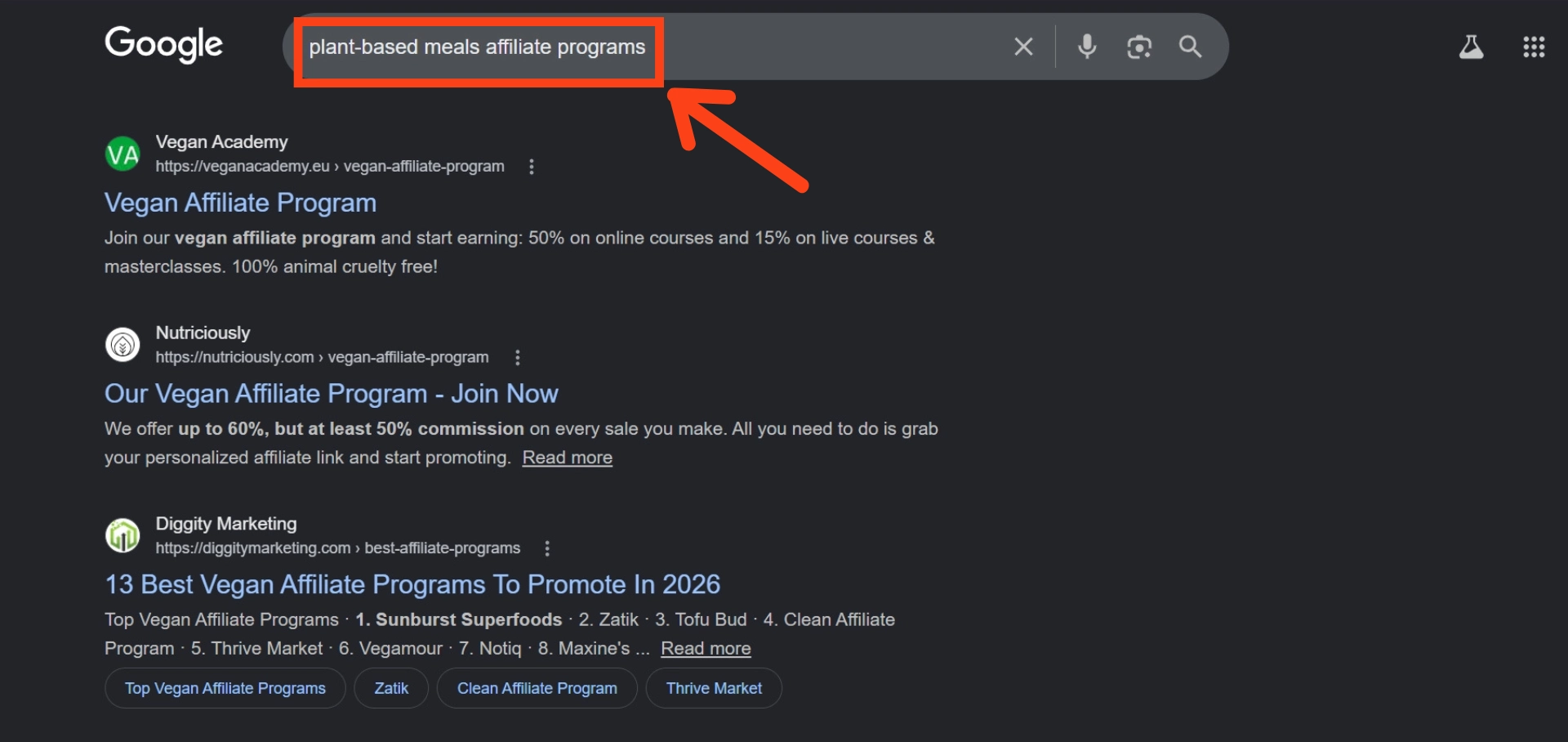
Check whether companies are running ads in your niche. You can do this by Googling a topic in your niche and noticing whether sponsored ads appear at the top. Advertisers only spend money where there is a buying audience. Their presence confirms there is money in the space.
Popular niches with strong monetization, worth considering are:
- Personal finance and budgeting
- Affiliate marketing and online income
- Remote work and freelancing
- AI tools and productivity software
- Home-based businesses and side hustles
- Fitness and wellness for specific groups
- Parenting and family
- Food, recipes, and meal planning
- Pet care in specific niches
- Sustainable living and eco-friendly products
Step 2: Choose the Right Blogging Platform
Your blogging platform is the software that powers your site. The choice you make here affects everything from how your site ranks on Google to how much creative control you have and how much you can grow.
WordPress.org vs Free Blogging Platforms
There are free blogging platforms available, such as Blogger, WordPress.com, Wix, and others. They are easy to set up and cost nothing to start. But they come with serious limitations that matter when you are building something with income potential.
On a free platform, you do not own your content fully. The platform can shut down your account, change its terms, or disappear entirely. You have limited control over design, functionality, and SEO. Many free plans place the platform’s branding on your site, which looks unprofessional and undermines trust.
Free platforms can work as a temporary starting point if budget is a real constraint. But as soon as you can afford the small cost of proper hosting, make the switch.
Why Self-Hosted WordPress Is the Right Choice for Serious Bloggers
WordPress.org, the self-hosted version, is what over 40 percent of all websites on the internet are built on. There is a reason for that.
You own everything. Your content, your design, your data. You have access to thousands of themes and plugins that let you customize and expand your site without writing a single line of code. It integrates with every major email marketing tool, SEO plugin, analytics platform, and monetization system available.
The SEO flexibility alone makes it worth it. Google rewards sites that are structured well, load quickly, and are optimized properly. Self-hosted WordPress gives you full control over all of those factors.
The cost to get started on WordPress is smaller than most people expect. A domain name costs around $10 to $15 per year. Hosting starts at a few dollars per month. That is less than most people spend on a single meal out.
Recommended Reading: How to Start Affiliate Marketing With No Website (Free Methods That Actually Work)
Step 3: Set Up Your Blog From Scratch
This is the part most beginners dread. The good thing is that it is significantly simpler than it looks from the outside. You do not need to know how to code. You do not need a technical background. If you can follow a numbered list, you can set up a blog.
Getting Your Domain Name
Your domain is your blog’s address on the internet. For example, mycashsense.com is a domain.
Choose something short, easy to remember, and relevant to your niche or your brand. Avoid numbers, hyphens, and anything that people would need to spell out to a friend. Keep it as clean and simple as possible.
Check availability on your hosting provider’s site. Most let you search for a domain during the signup process. Many hosting plans, including beginner plans on Hostinger, offer a free domain name for the first year, which cuts your startup costs even further.
Do not overthink this decision. A clean, simple name that you can build a brand around is more important than a perfectly clever one that takes three weeks to choose.
Setting Up Hosting
Your hosting provider is the service that stores your website files and makes your blog accessible to anyone on the internet. The quality of your hosting affects your site’s speed, reliability, and uptime.
Hostinger is the hosting provider I recommend for beginners without hesitation.
The pricing is genuinely affordable, the performance is solid, and the onboarding process is one of the simplest available. They have a beginner-friendly dashboard, 24-hour support if you run into questions, and plans that include a free SSL certificate, which helps make your site secure and trusted by Google. You can have your site live within an hour of signing up.
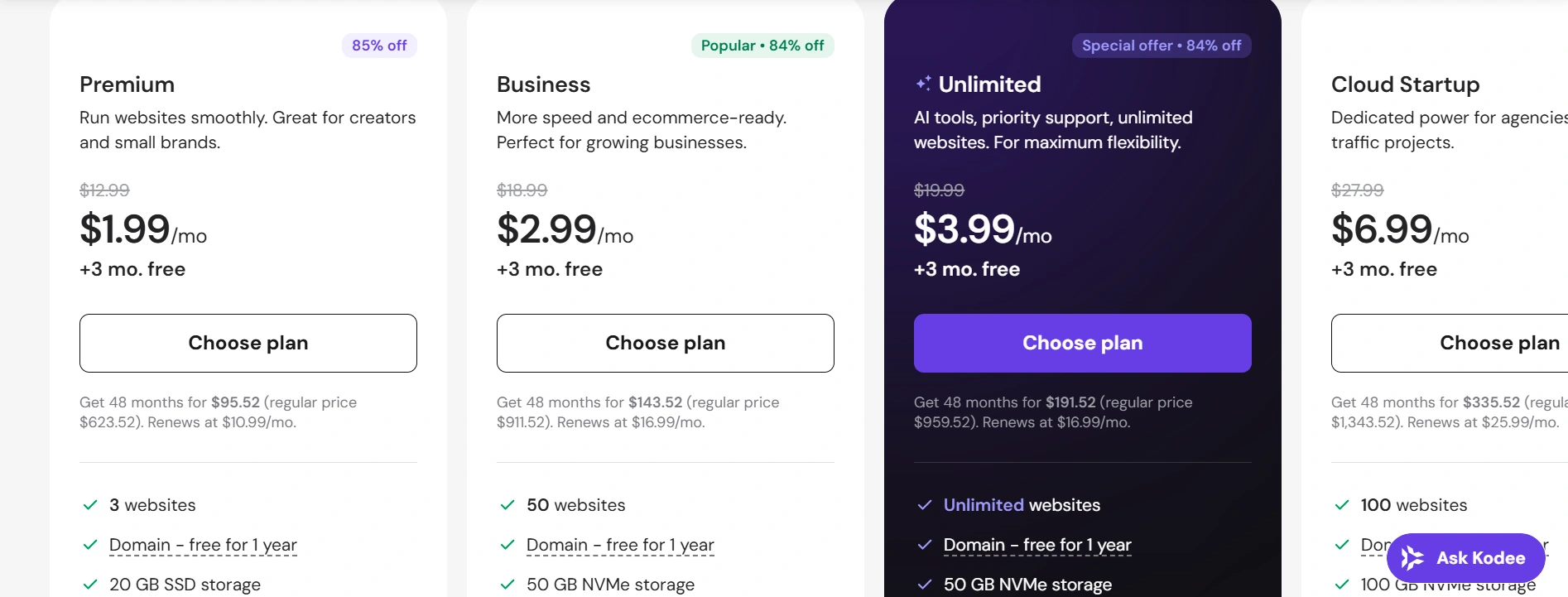
When choosing a plan, their basic shared hosting plan is more than sufficient for a new blog. You can always upgrade as your traffic grows.
Installing WordPress
Once your hosting is active, installing WordPress takes about two minutes. Most major hosting providers, including Hostinger, include a one-click WordPress installer in their dashboard. You click install, choose your domain, set a username and password, and your WordPress site is live.
You will then log into your WordPress dashboard, which is your blog’s control center. Everything from writing posts to installing plugins to changing your design happens from here.
Choosing a Theme
Your theme controls how your blog looks. Fortunately, you do not need to spend money on a premium theme when you are starting out.
WordPress comes with free themes that are clean, fast, and professional. Astra, Kadence, and GeneratePress are three free options with excellent reputations for speed and flexibility. Avoid themes with too many built-in animations, sliders, and flashy elements. They slow your site down and distract from your content.
What matters most in a theme is that it is mobile responsive, meaning it looks good on a phone, that it loads quickly, and that the text is easy to read. Design can be refined later. Get something clean and functional up first.
Speaking of themes, Kadence is worth a mention here. It has an excellent free version and a straightforward builder that lets you customize your blog’s look without any design experience. It is one of the more beginner-friendly options in the WordPress ecosystem.
Essential Plugins to Install First
Plugins add functionality to your WordPress site. Think of them as apps on a phone. But more is not better here. Too many plugins slow your site down and create security risks.
Start with these core ones only.
An SEO plugin. Rank Math or Yoast SEO. Both help you optimize each blog post for search engines. They guide you through adding the right meta descriptions, titles, and structure for each post.
A caching plugin. WP Rocket is the premium option, but WP Super Cache is free and works well. Caching makes your site load faster, which helps both your readers and your Google rankings.
A security plugin. Wordfence has a solid free plan that protects against common threats.
An image optimization plugin. ShortPixel or Smush compresses your images automatically so they do not slow your pages down.
A backup plugin. UpdraftPlus backs up your site regularly. Free and reliable.
That is enough. Resist the urge to install a plugin for every new feature you discover. Every additional plugin has a cost to your site’s speed and stability.
Core Pages Every Blog Needs
Before you publish your first post, create these pages. They build trust with your readers and keep you legally covered.
About page. Tell your readers who you are, why you started this blog, and how it can help them. This is often one of the most visited pages on a blog. Write it in a warm, direct tone. Make it personal without oversharing.
Contact page. A simple form so readers and potential partners can reach you.
Privacy Policy. Required by law in most countries, particularly if you collect any data, including email addresses or use Google Analytics. You can generate one using a privacy policy generator.
Affiliate Disclosure. If you plan to use affiliate links, which you should, you are legally required to disclose this clearly. A short statement explaining that your content may contain affiliate links and that you earn a commission if someone buys through those links. Place this on your disclosure page and reference it at the top of any post containing affiliate links.

Termly is a tool that helps you generate properly formatted Privacy Policy, Cookie Policy, and Disclaimer pages quickly and without needing a lawyer. Useful for getting the legal side sorted properly from the start.
Step 4: Plan Your Content Strategy Before You Write Anything
A blog without a content strategy is like a shop without a plan for what it sells. You end up writing whatever seems interesting that day and ending up with a scattered collection of posts that do not build authority in any specific direction.
Content strategy means deciding what you will write, who you are writing it for, and how each piece fits into the bigger picture of your blog’s traffic and income goals.
What Keyword Research Actually Is
Keyword research is the process of finding the specific words and phrases people type into Google when they are looking for information related to your niche. When you write a post targeting a specific keyword, you give that post a real chance of appearing in search results and bringing in organic traffic.
Without keyword research, you are guessing at what people want to read. With it, you are writing content that answers questions people are already asking. The difference in traffic outcomes between those two approaches is enormous.
How to Find Topics People Are Searching For
You do not need an expensive tool to start doing keyword research. There are several ways to find real search queries in your niche.
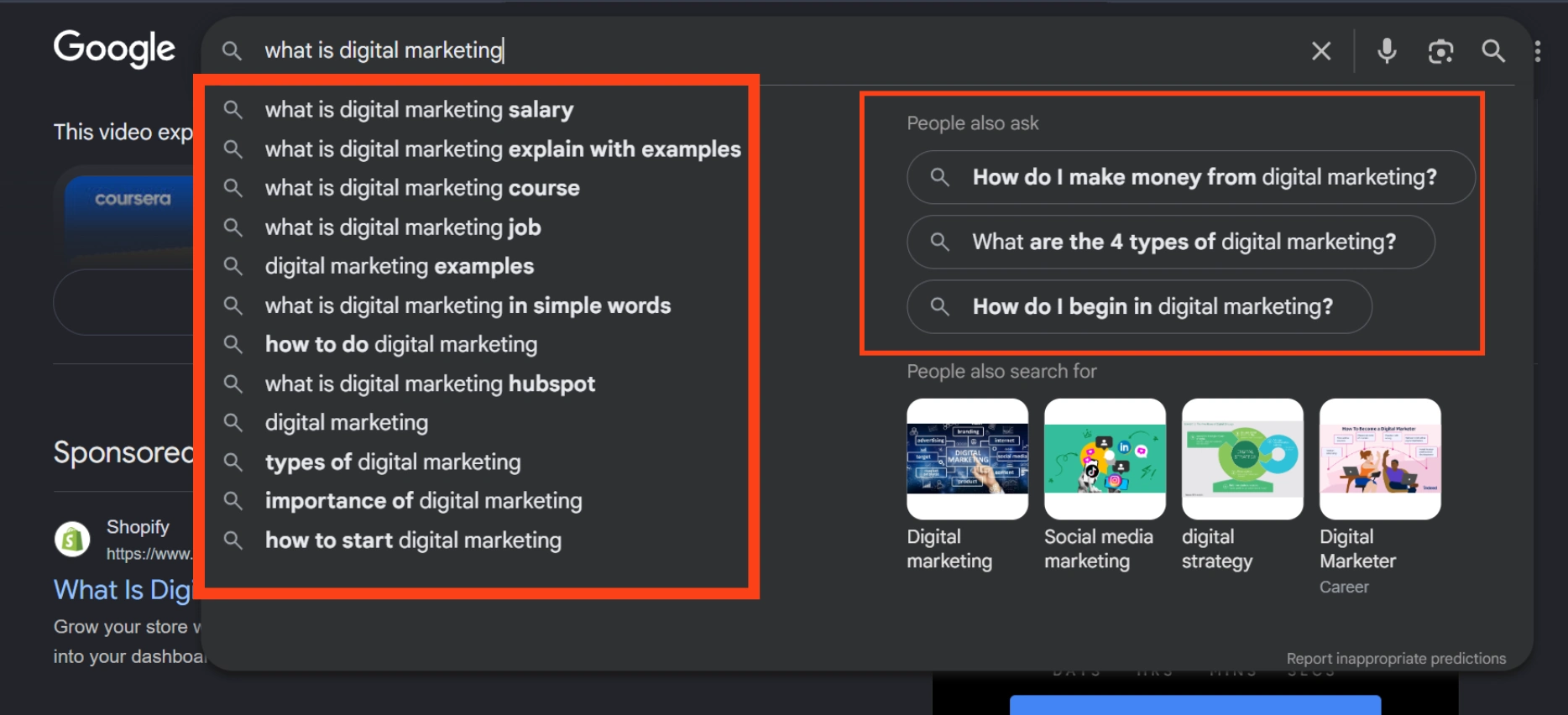
Google autocomplete is free and surprisingly useful. Start typing a topic into Google and see what suggestions appear. Those suggestions are based on what real people are searching for.
Google’s “People Also Ask” box appears in most search results and shows you related questions people are asking around a topic. Each of those questions is a potential blog post.
For more data, you need a proper keyword research tool. Semrush is the one I rely on for this. It shows you the monthly search volume for any keyword, how competitive it is to rank for, what keywords your competitors are targeting, and content gaps you can fill. The free version gives you a meaningful number of daily searches, which is enough to get started. When your blog grows, and you need deeper data, upgrading becomes straightforward.
When evaluating keywords, look for a combination of meaningful search volume and manageable competition. As a new blog with no authority yet, you will struggle to rank for highly competitive terms immediately. Target more specific, lower-competition phrases first and build from there.
Building Your First Content Plan
Before you publish anything, map out your first twenty to thirty blog post ideas. This sounds like a lot, but it goes faster than you expect once you have done your keyword research.
Organize your content into three types.
Pillar posts are comprehensive guides on broad topics in your niche. They are the foundational content that everything else links back to. The post you are reading now is a pillar post.
Cluster posts are more specific articles that dig deeper into subtopics covered briefly in a pillar. They link back to the pillar and to each other, which builds topical authority and helps Google understand the structure of your site.
Conversion posts are pieces written specifically to attract readers who are close to a buying decision. Product reviews, comparison posts, and “best of” lists fall into this category. These are where most of your affiliate income will come from.
A healthy content plan has a mix of all three. Build your first pillar, then cluster around it, and pepper in conversion posts from the start.
Step 5: Write Blog Posts That People Actually Read and Share
Writing for a blog is not the same as writing an essay in school. The style is different. The structure is different. And the goal is different too. You are not being graded. You are helping someone solve a problem quickly and clearly.
How to Structure a Blog Post That Works
Every blog post that performs well follows a recognizable structure. It does not have to be rigid, but the elements matter.
Start with an introduction that hooks the reader and tells them exactly what they will learn. Be direct. Get to the point within the first few sentences. Most readers decide within ten seconds whether to stay or leave.
Use a TL;DR or key takeaways summary near the top for readers who want to scan before they commit.
Break the body into clearly labeled sections using H2 and H3 headings. Each section should answer one specific question or cover one clear idea. Readers do not read blogs the way they read books. They scan. Clear headings help them find what they need and decide whether to read further.
Use short paragraphs. Two to three sentences maximum. Large blocks of text lose readers quickly, especially on mobile.
End with a conclusion that summarizes the key points, encourages action, and points readers toward related content on your site.
Writing Tips That Make Your Content Stand Out
Write the way you actually talk. Not the way you write formal emails. Not the way a textbook reads. If you would not say a sentence out loud to a friend explaining something, rewrite it.
Use specific examples instead of vague generalizations. “This tool saves time” means very little. “This tool found me three keyword opportunities in under ten minutes that my manual research missed” is specific and believable.
Be honest about limitations, downsides, and realistic expectations. Readers can sense when someone is trying to sell them something versus genuinely trying to help them. The blogs that build lasting audiences are the ones that tell the truth even when it is less exciting.
Avoid writing about things you have no actual experience with. Google’s E-E-A-T guidelines reward content that demonstrates real experience. Readers feel it too.
How Long Should a Blog Post Be?
The right length for a blog post is, however, as long as it takes to fully answer the question the reader came with, without unnecessary padding.
As a practical guideline, informational and pillar posts work well between 1,500 and 4,500 words, depending on the complexity of the topic. Conversion posts like product reviews are often strong between 1,000 and 2,500 words. Quick tutorial posts can perform well at 800 to 1,500 words if they cover the topic completely.
Length should be driven by thoroughness, not by trying to hit an arbitrary word count. A 600-word post that completely answers a simple question will outperform a 3,000-word post stuffed with repetition every time.
Recommended Reading: How to Write Blog Posts That Rank on Google: A Step-by-Step Guide for Beginners
Step 6: Get Traffic to Your Blog
You can have exceptional content and earn nothing from it if people never find it. Traffic is what connects your blog to your income. Here is how to build it as a beginner.
SEO Traffic — The Long Game Worth Playing
Search engine optimization is the practice of making your blog posts more likely to appear when people search relevant topics on Google. It is the most valuable traffic source for bloggers because it is consistent, compounding, and free.
A post that ranks on page one of Google for a meaningful keyword can bring in readers every single day for years without you doing anything additional. That is the power of organic search traffic.
The core elements of SEO for bloggers are keyword targeting, which we covered in step four, on-page optimization, which includes using your target keyword in your title, your first paragraph, your headings, and your meta description, and building your site’s overall authority over time through consistent publishing and getting links from other sites.
It takes time. Most new blog posts take three to six months to start appearing meaningfully in search results. This is why starting early matters more than starting perfectly.
Pinterest — The Underrated Traffic Source
Pinterest behaves more like a search engine than a traditional social platform. People go there specifically to discover ideas and resources. This makes it one of the most effective traffic sources for bloggers in niches like personal finance, wellness, travel, food, home, and online business.
The way it works is simple. You create vertical image pins linked back to your blog posts. When someone searches a related topic on Pinterest, your pin can appear in the results and send readers to your site. A single strong pin can keep bringing traffic for months or even years.
Pinterest works much faster than Google SEO for new blogs, which makes it useful in the early stages when your search rankings are still growing. I recommend Tailwind because it helps you schedule pins consistently and manage your Pinterest content more efficiently without spending hours online every day.
Social Media — Which Platforms Are Worth Your Time
The biggest mistake bloggers make with social media is trying to be everywhere at once. It spreads effort thin and produces mediocre results on every platform.
Pick one or two platforms that fit your niche and communication style, and build there consistently. If your niche is visual, Instagram or TikTok makes sense. If your audience is professional, LinkedIn might be stronger. For general online business and marketing content, Twitter and Facebook groups can work well.
The goal with social media is not to get followers for the sake of followers. The goal is to get followers who click through to your blog and eventually join your email list. Use social content to share snippets, spark curiosity, and direct people to the full content on your site.
Use SocialPilot for managing multiple social accounts more efficiently. It helps schedule posts ahead of time, stay consistent, and save time when promoting blog content across different platforms.
Email Traffic — The Channel You Actually Own
Every other traffic source is borrowed. Google can update its algorithm and cut your traffic. Social platforms can limit your reach. But your email list belongs to you.
When you send an email to your subscribers, you are reaching people who already know you, trust your content, and chose to hear from you. That quality of relationship converts at a completely different level than cold search traffic.
Building your email list from your very first blog post is not just good practice. It is the decision that separates bloggers who build a lasting income from those who stay dependent on external traffic sources forever. We cover this in detail in the next step.
Step 7: Build Your Email List From Your Very First Post
Most beginner bloggers treat email as something they will set up “later, once they have more traffic.” This is one of the most common and costly mistakes in blogging.
Every reader who visits your site before you have an opt-in form in place is gone. You have no way to reach them again unless they happen to come back. Over a year of growing traffic, that adds up to potentially tens of thousands of lost opportunities to build a relationship.
Setting up a basic email list system is simpler and cheaper than most people expect. GetResponse is an email marketing platform worth considering for bloggers. It includes email marketing, an autoresponder sequence, landing pages, and basic automation in one place, with plans designed to grow alongside your blog. The interface is clean, and the deliverability is strong, which matters more than most beginners realize. Poor deliverability means your emails go to spam instead of inboxes.
What you need to start is simple. A way for visitors to enter their email address, usually a form embedded in your blog posts or a popup. A free resource, often called a lead magnet, that gives them a reason to sign up. A simple welcome email that introduces who you are and what they can expect.
Lead magnets do not need to be elaborate. A one-page checklist related to your niche, a short resource guide, a free template, or a brief email course all work well. The key is that it solves a specific, immediate problem your reader has right now.
What should you send your list after that? A weekly or fortnightly email with something genuinely useful. A tip they can apply. A short tutorial. A resource or tool you have tested. Occasionally, an honest recommendation with an affiliate link. The relationship you build through a consistent, helpful email presence is what makes your monetization feel natural rather than pushy.
Step 8: Monetize Your Blog and Make Your First Dollar
This is the section most beginners skip straight to. And that is completely understandable. But it is also the reason I structured this guide the way I did. Every step before this one exists to make this step actually work. Without content, traffic, and an audience, monetization is just strategy without infrastructure.
With those foundations in place, here is how blogs make money.
Affiliate Marketing
Affiliate marketing is when you recommend someone else’s product through a trackable link and earn a commission when a reader makes a purchase. You do not create the product. You do not handle sales or customer service. You earn for the introduction.
For most beginner bloggers, this is the fastest path to the first dollar. You do not need to create anything new. You use products relevant to your niche, join their affiliate programs, and include your links naturally inside helpful content.
The content types that work best for affiliate income are product reviews, comparison posts, and tutorials that naturally incorporate a tool as part of the solution. Write honestly, recommend only things you have used or genuinely trust, and always disclose your affiliate relationships.
For a deeper framework on how affiliate funnels actually work and how to structure your promotions for consistent conversions, THE H.E.A.R.T Funnel Formula is the resource I put together specifically for this. It walks through a trust-based approach to affiliate marketing designed for beginners who want to build income systematically rather than guessing.
Recommended Reading: Best Affiliate Programs for Beginners in 2026 (No Big Audience Required)
Display Advertising
Display ads are banner advertisements that appear on your blog pages. When visitors see or click those ads, you earn a small amount. The most common beginner ad network is Google AdSense.
The honest reality is that ad income requires significant traffic to become meaningful. Most bloggers earn between $5 and $30 per thousand page views from display ads depending on their niche. That means a blog getting 10,000 visitors per month might earn $50 to $300 from ads alone.
Display ads make sense as a passive add-on once you have traffic. They are not the strategy to focus on in the early months when traffic is still small.
Once your blog reaches higher traffic levels, ad networks like Mediavine and Raptive typically pay significantly more than Google AdSense and can become substantial income streams.
Selling Your Own Digital Products
Once you have an established audience that trusts your content, selling your own digital product, a course, an ebook, a template pack, or a coaching offer, can generate significantly higher income per transaction than affiliate commissions.
The advantage is that you keep all the revenue instead of earning a percentage. The requirement is that you need a genuine audience with a real problem your product solves.
This is typically a stage two or stage three monetization method. Get the traffic and the trust first. Then create something worth paying for.
If you want to see how this works in practice, The First Dollar Blueprint is a digital product I created for complete beginners. It is a 7-day action plan that walks through the exact steps to earn your first dollar online. It is a real example of what a focused, beginner-friendly digital product looks like when built around a specific audience problem.
Recommended Reading: Best Platforms to Sell Digital Products and Start Earning
Sponsored Content
Brands sometimes pay bloggers to write about their products or feature them in existing content. Sponsored posts, product placements, and newsletter sponsorships are all forms of this.
Sponsored content typically becomes available once your blog has built an audience and measurable traffic. Brands want to know their sponsored content will reach real people. In the early months, this option is mostly unavailable, but it becomes relevant once your traffic and email list grow.
Which Monetization Method Is Best for Beginners?
For the first dollar specifically, affiliate marketing wins. You do not need to create anything. You do not need massive traffic. A single well-placed affiliate link in a well-written, targeted post can generate your first commission.
The practical path is this. Set up your blog. Publish your first ten posts, mixing informational content with two or three buyer-intent posts containing affiliate links. Work on your SEO. Build your email list. The first commissions come from that buyer-intent content ranking and converting.
Recommended Reading: How Bloggers Make Money Online (And What the Real Income Numbers Actually Look Like)
How Long Does It Take to Make Money From a Blog?
This is the question every beginner deserves an honest answer to.
The first dollar for most bloggers who follow a clear strategy and publish consistently comes somewhere between three and six months. Some see it sooner if they target the right keywords from the start and their niche has lower competition. Some take longer if they are in a crowded space or publish inconsistently.
Here is what a realistic timeline typically looks like.
Months one and two are about setup and foundation. Getting the site live, writing the first ten to fifteen posts, learning keyword research basics, and building the email infrastructure.
Months three and four are about building consistency and early traction. Publishing two to three posts per week, starting to see small amounts of search traffic, getting the first few affiliate clicks.
Months five and six are often when the first meaningful income appears. Posts start ranking. Traffic grows. The first affiliate commissions arrive.
Months six to twelve is where it starts feeling real for bloggers who stayed consistent. The monthly income that used to be $0 is now $100, then $300, then $500. The compound effect of months of consistent publishing starts to show up in the numbers.
Year two and beyond is where blogs that stayed the course often cross the $1,000 to $5,000 per month range. Some go significantly further. The income potential is not capped, but the timeline to reach it requires patience.
What speeds this up is following a clear, structured plan from the start rather than learning through months of trial and error. The First Dollar Blueprint is the 7-day action plan I created specifically to give beginners that structured starting point. It removes the guesswork from the first week and puts you on the fastest, most realistic path to that first income.
Blogging Mistakes That Cost Beginners Months of Progress
These are not theoretical. They are the patterns that repeatedly delay real results for beginners who could have gotten there faster.
Choosing a niche that is too broad. “Health” is not a niche. “Mental health tips for college students” is. The broader your niche, the harder it is to rank, the harder it is to build a loyal audience, and the harder it is to choose the right affiliate products. Go specific from the start.
Publishing without keyword research. Writing whatever comes to mind feels creative, but it does not build traffic. Every post you publish without a target keyword is a post that has almost no chance of being discovered through search. Research first. Write second.
Focusing on design instead of content. Beginners spend weeks adjusting colors, fonts, and layouts when they should be writing posts. A clean, functional design is enough to start. Your readers come for the content, not the color palette.
Writing for everyone instead of someone specific. If your content tries to appeal to everyone, it resonates with no one. Write with a specific type of reader in mind. Every post should feel like it was written directly for that person.
Skipping the email list. I have said this multiple times in this guide and will say it again here because it is that important. Every reader who leaves your site before you have a list is gone forever. Set it up before you publish your first post.
Giving up during the slow phase. The first three to four months of blogging are genuinely slow. Traffic is minimal. Income is nonexistent. Most people quit here. But this is also when all the foundational work is being done. The blogs that make real money are almost always the ones that pushed through this phase.
Treating every post as isolated instead of interconnected. Google rewards sites where content links to other relevant content on the same site. This is called internal linking and it signals topical authority. Every new post you publish should link to two or three related posts already on your site.
Trying to copy what large blogs are doing. Large, established blogs have a domain authority built over the years. They can rank for competitive keywords that a new blog has no chance with yet. Start with niche-specific, low-competition topics and build from there.
Conclusion
Starting a blog that makes money is one of the most accessible and realistic paths to online income available to beginners right now. It does not require a technical background, a large budget, or an existing audience.
What it requires is a clear plan, consistent execution, and patience through the slow early phase.
You now have that plan.
- Choose a focused niche.
- Build your site on self-hosted WordPress.
- Create content that targets real search queries.
- Drive traffic through SEO, Pinterest, and social media.
- Build your email list from the very first visitor.
- Monetize through affiliate marketing first, then expand your income streams as your audience grows.
None of this is complicated when you follow it step by step. The bloggers who look back after eighteen months with a real income are the ones who started with a plan and kept going when it felt slow.
Start today. Build consistently. Give it time to compound.
If you want to go deeper on related topics, read through how to start affiliate marketing for beginners or explore the best ways to drive traffic to a new blog. Both connect directly to what you have just learned here.
Frequently Asked Questions – How to Start a Blog and Make Money
How much does it cost to start a blog?
You can start a blog for as little as $30 to $50 per year. That covers a domain name and basic hosting. Many essential tools including SEO plugins and basic email marketing have free plans that cover everything you need in the early stages. You do not need a large upfront investment to get started with a professional-looking blog.
Do I need to be a good writer to start a blog?
No. Blogging rewards clarity and helpfulness more than literary skill. If you can explain something in plain, straightforward language that your reader understands, you can write a successful blog. Good writing for blogs is simply clear, direct, and useful. Most bloggers improve significantly just by publishing consistently over the first few months.
How do beginner blogs make their first dollar?
The fastest path to a first dollar for most beginner bloggers is affiliate marketing. You write content that naturally recommends a relevant product, include your affiliate link, and earn a commission when a reader buys through that link. A single buyer-intent post targeting the right keyword can generate your first commission within weeks of ranking on Google.
Can I start a blog without showing my face or using my real name?
Yes. Many successful blogs operate under a pen name or brand name without the blogger ever appearing on camera or using their real identity. An About page written in a warm, personal tone still builds trust even if it does not include a real name or photo. What matters most to readers is that your content is helpful and honest.
How often should I publish blog posts as a beginner?
Aim for two to three posts per week if your schedule allows. Consistency matters more than volume. Publishing one thoroughly researched, well-optimized post per week is significantly more effective than publishing five rushed, shallow posts. The goal is to build a library of quality content over time, not to flood your site with quantity.
How long does it take for a blog to show up on Google?
It typically takes between three and six months for new blog posts to start appearing meaningfully in Google search results. Google needs time to discover, crawl, index, and evaluate new content before deciding where to rank it. This is why starting early and publishing consistently from day one matters. The posts you publish today are the ones building your traffic six months from now.