Top 10 Places to Find Freelancing Clients Online (And What Works on Each One)

Here are the top 10 places to find freelancing clients online, what each platform is genuinely good for, and the specific approach that gets results on each one.

Start Building Your Online Income
Ready to Start Earning Online? Our Beginner’s Starter Kits give you practical guidance on specific ways to earn online, helping you understand how they work, what you need to get started, and the steps to take along the way. Each kit is focused on a specific method, so you can spend less time searching for scattered information and more time putting what you learn into practice.
I have been in the freelance field for quite some time, so I know how hard it can be to find clients. Finding your first freelancing client can sometimes be harder than learning the actual skill you want to sell.
You might know how to write, design, edit videos, manage social media, build websites, or handle virtual assistant tasks. The bigger question is often where to find people who are actually willing to pay for those skills.
The good news is that you do not have to rely entirely on friends, family, or randomly messaging businesses. There are freelance marketplaces, professional networks, job boards, and other platforms where businesses already look for people to work with.
In this article, I will show you 10 places worth considering if you are looking for freelancing clients online.
Quick Answer: The best places to find freelancing clients online include Upwork, Fiverr, Freelancer.com, LinkedIn, Contra, PeoplePerHour, Toptal, Wellfound, Remote OK, and direct outreach to businesses. Each suits a different type of freelancer and a different stage of experience. Beginners do best on Upwork and Fiverr. Experienced professionals get better results on Toptal and LinkedIn. Direct outreach produces the best clients but requires the most initiative.
TL;DR
- No single platform works for every freelancer. Choose platforms that match your service, experience level, and type of client you want to reach.
- Your results depend on more than simply creating an account. A strong profile, relevant portfolio, and specific proposals can help you stand out from other freelancers.
- Direct outreach to businesses is another option outside freelance platforms. It can put you directly in front of potential clients instead of competing for posted jobs.
- Start with one or two platforms and learn how they work before expanding. Trying to maintain profiles across ten platforms can spread your time and effort too thin.
Recommended Reading: Best Freelance Niches for Beginners: Which One Should You Actually Choose?
Top 10 Places to Find Freelancing Clients Online: A Quick Summary
| Platform | Best For | How It Works | Competition Level | Payment Structure | Best Starting Point For |
|---|---|---|---|---|---|
| Upwork | Beginners and project-based work | Clients post jobs, you submit proposals | High | Platform takes a percentage | Complete beginners |
| Fiverr | Package-based services | You create Gigs, clients find you | High | Platform takes 20% | Creatives with specific, repeatable services |
| Freelancer.com | Wide project variety | Bidding on posted projects | High | Platform takes a percentage | Freelancers wanting volume |
| Relationship-based and B2B clients | Content presence + direct outreach | Medium | No platform fees | Writers, designers, B2B freelancers | |
| Contra | Creative and digital professionals | Portfolio-based profile, clients contact you | Medium | Zero commission | Designers, developers, writers |
| PeoplePerHour | UK/European clients and secondary channel | Apply to jobs or create Hourlies | Medium | Platform takes a percentage | Freelancers expanding beyond Upwork/Fiverr |
| Toptal | Experienced professionals | Rigorous screening, matched with clients | Low (selective) | Platform takes a percentage | Senior developers, designers, finance experts |
| Wellfound | Startup-focused freelancers | Browse startups, direct outreach | Low | No platform fees | Freelancers targeting early-stage companies |
| Remote OK | Longer-term remote contracts | Browse contract and part-time listings | Medium | Varies by listing | Freelancers wanting stable engagements |
| Direct Outreach | Confident self-starters | Identify businesses and pitch directly | None (you are the only one pitching) | No platform fees | Freelancers comfortable with prospecting |
10 Best Places to Find Freelancing Clients Online
1. Upwork
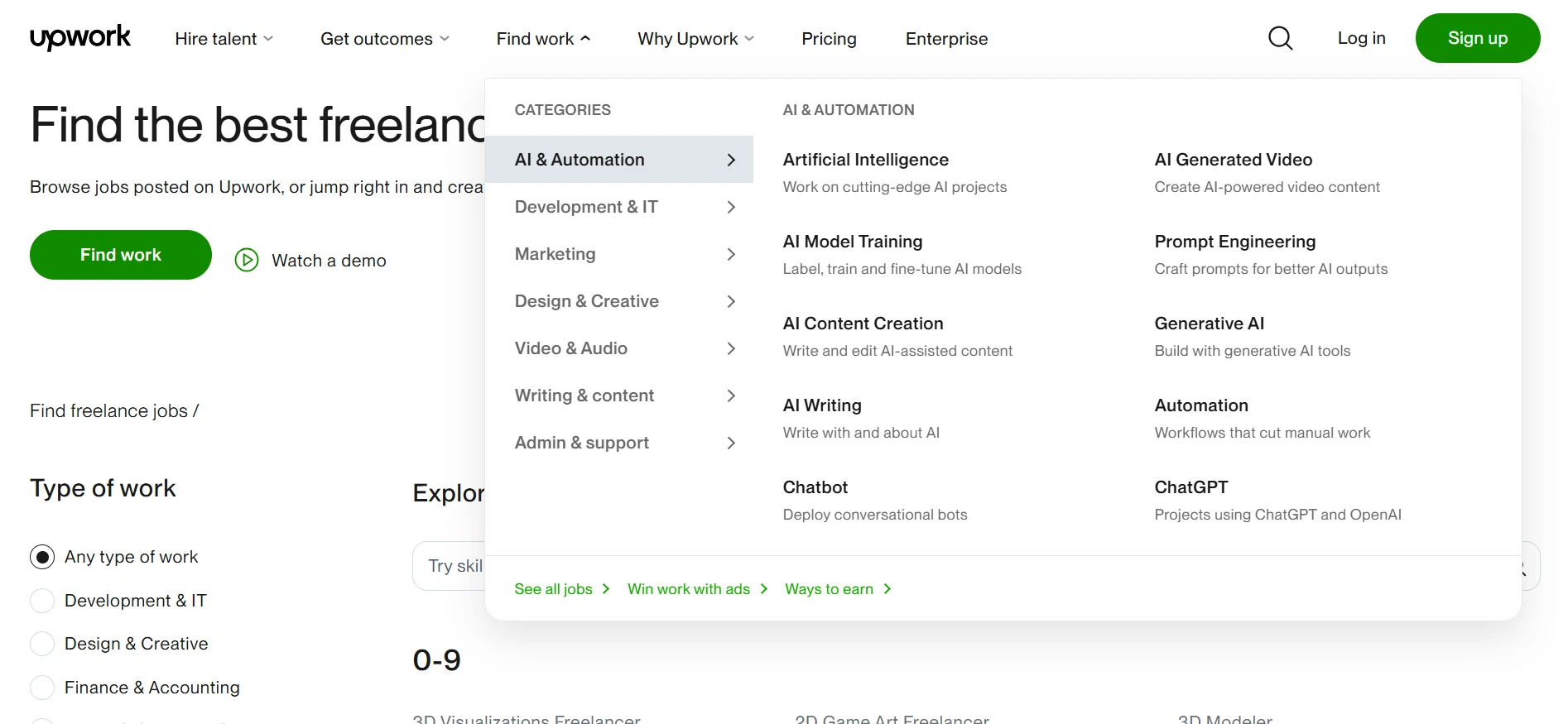
Upwork is the largest professional freelancing marketplace and the one I recommend most consistently to beginners, not because it is easiest but because it is the most structured learning environment for understanding how client acquisition actually works.
Clients post projects across every service category you can think of. Writing, design, development, virtual assistance, data entry, marketing, customer support, social media management, video editing, and hundreds of subcategories all have active job listings at any given time. You create a profile, search for relevant projects, and submit proposals.
The difficulty on Upwork is the competition. Every public job posting receives multiple proposals. A generic message that says “I’m a reliable writer with five years of experience and I’d love to help with your project” gets ignored. What gets responses is a proposal that demonstrates you read the specific job listing, understands what the client actually needs, and explains precisely how you would approach their problem.
Start with smaller, well-scoped projects rather than large ongoing contracts. Your goal in the first month is not maximum income. It is your first completed job with a five-star review. That review changes everything about how future clients perceive your profile.
Best for: Freelancers looking for project-based and ongoing work.
Tip: Focus your profile and proposals around a specific service instead of trying to offer everything.
See also: How to Get Your First Freelance Client Fast
2. Fiverr
Fiverr works differently from every other platform on this list, and understanding that difference is what determines whether it works for you.
On most platforms, clients post jobs and freelancers apply. On Fiverr, you create service listings called Gigs and clients find you through search. A writer creates a Gig titled “I will write SEO blog posts for technology companies.” A designer creates one for “I will design a professional logo with three concept variations.” A virtual assistant creates one for “I will manage your email inbox and appointment scheduling.”
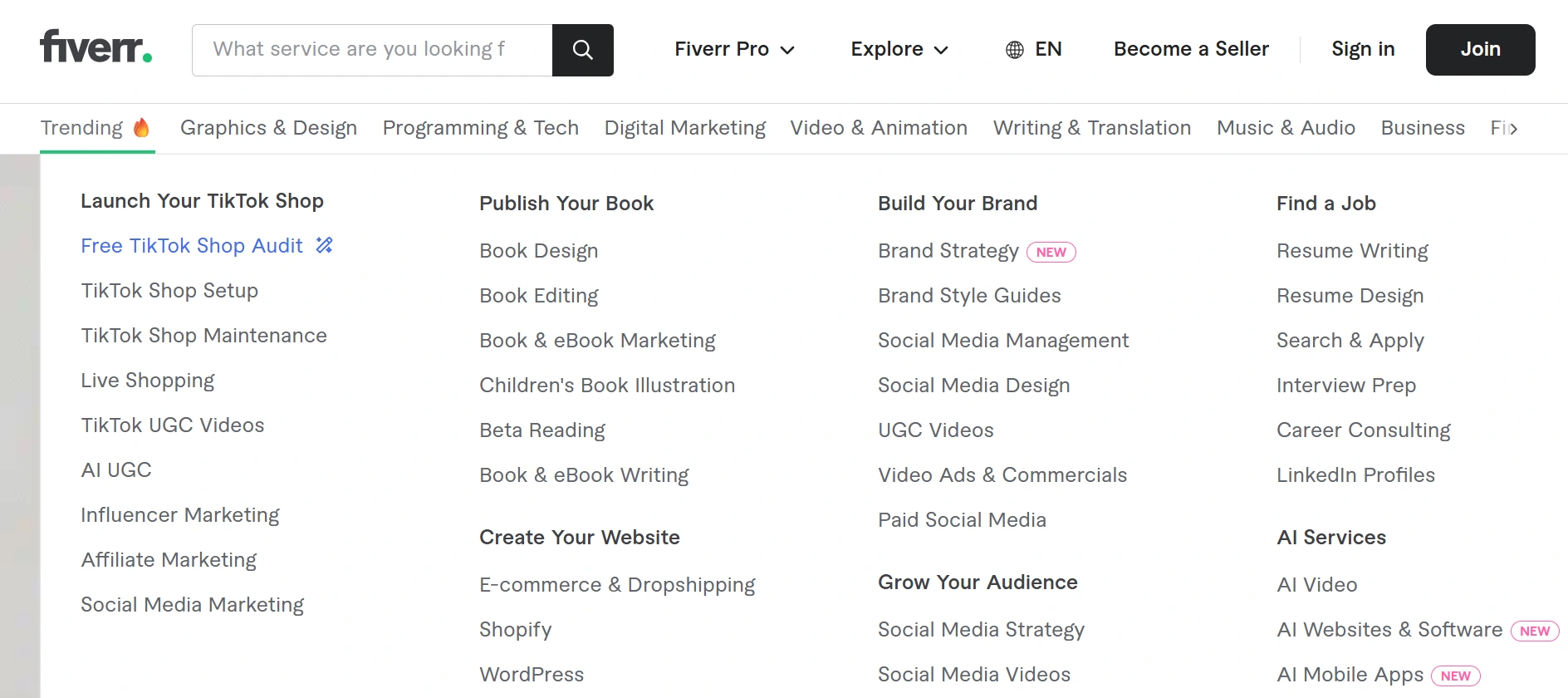
Clients who need exactly that service find you through Fiverr’s internal search engine. They click your Gig, read the description, look at your samples, and either place an order or message you first.
The critical word in every successful Fiverr Gig is specific. Broad Gigs like “I will write content” compete with tens of thousands of other listings. Narrow Gigs like “I will write weekly email newsletters for fitness coaches” speak to a precise buyer who finds the listing because it describes exactly what they need.
The early days on Fiverr require active promotion because new accounts with no reviews don’t appear high in search results. Share your Gig link on social media, in relevant communities, and with your personal network to drive initial traffic and first-order volume.
Best for: Freelancers who can package their skills into clearly defined, repeatable services.
Tip: Make your Gig specific. “I will write blog posts” is less targeted than “I will write SEO-friendly blog posts for SaaS businesses.”
3. Freelancer.com
Freelancer.com is one of the older freelancing marketplaces and covers a broad range of project categories including writing, design, development, data entry, translation, marketing, and virtual assistance work.
The platform uses a bidding system. Clients post projects and freelancers submit bids explaining what they would charge and how they would approach the work. The client reviews bids and chooses who to hire.
The bidding model makes proposal quality especially important. A bid that opens with your experience and qualifications is weaker than one that opens with a direct observation about the client’s project, followed by a concise explanation of your specific approach.
Freelancer.com has a larger international community than some competitors, which means hourly rates on certain project types can be compressed by competitive bidding from lower-cost markets. Focus on projects where your specific knowledge or language skills create genuine differentiation rather than competing purely on price.
Best for: Freelancers who want access to a wide project variety across multiple categories.
Tip: Don’t make your proposal all about yourself. Start by showing that you understand what the client needs.
4. LinkedIn
LinkedIn is not a freelance marketplace. It is something more valuable: a professional network where the people who make hiring decisions are already present and active.
Marketing managers, startup founders, content directors, agency owners, and small business operators all use LinkedIn daily. Many of them need freelance help. Most of them are not posting a formal job listing to find it.
LinkedIn works for freelancing clients through two mechanisms that most beginners don’t use effectively.
The first is inbound through content. Publishing weekly posts that demonstrate genuine knowledge of your service area builds visible expertise over time. A freelance copywriter who posts regularly about what makes landing page copy convert gets discovered by marketing managers who follow that content and then reach out when they need help. This takes months to produce results. It compounds significantly once it starts.
The second is direct outreach. LinkedIn makes it possible to find and contact specific types of businesses in specific industries with specific job titles. A virtual assistant looking for clients can search for “founder” or “CEO” at companies with five to twenty employees and identify business owners who are likely managing everything themselves and could genuinely use help. A direct, specific, friendly message is more likely to produce a client relationship than any generic job application.
The combination of content presence and targeted direct outreach is how LinkedIn becomes a serious client acquisition channel rather than just a professional resume.
Best for: Freelancers who want to build relationships, find B2B clients, or work with established businesses.
Tip: Don’t make your entire LinkedIn presence an advertisement for your services. Share useful information that demonstrates what you can actually do.
5. Contra
Contra is a platform designed specifically for independent professionals and freelancers, with a strong emphasis on creative and digital services.
The platform lets freelancers build a portfolio page that functions like a professional profile, showcasing completed projects, service descriptions, and client testimonials. Clients browse profiles and contact freelancers who match what they need.
Contra’s zero-commission model is a meaningful differentiator. Most freelancing platforms take a percentage of every transaction. Contra takes nothing from freelancer earnings, which means you keep the full rate you charge.
The trade-off is that Contra has a smaller active client base than Upwork or Fiverr. It works best for freelancers who can build a strong visual portfolio that speaks for itself and who treat the platform as one distribution channel rather than their primary source.
Best for: Designers, developers, writers, and marketers who have portfolio work to showcase.
Tip: Treat your profile like a mini portfolio rather than simply listing your skills.
Recommended Reading: How to Build a Portfolio With No Experience.
6. PeoplePerHour
PeoplePerHour is a UK-origin platform that has expanded significantly and now serves clients and freelancers globally across writing, design, development, marketing, and administrative work.
The platform supports two modes of finding work. You can actively search and apply to project listings, or you can create service packages called Hourlies that clients can discover and purchase directly, similar to Fiverr’s Gig model.
This dual approach gives you more surface area for being found. Active job searching produces quick results when you are available and responsive. Discoverable service packages produce results passively as your profile builds history.
PeoplePerHour is worth including in your platform mix as a secondary channel rather than your primary one, particularly if Upwork and Fiverr are already producing some work and you want to expand without starting over on an entirely unfamiliar platform.
Best for: Freelancers who want an established platform beyond the most obvious options.
Tip: Keep your service descriptions focused on the result the client wants rather than simply listing the tools you know.
7. Toptal
Toptal is not where most beginners should start, and saying that clearly is more useful than pretending every platform suits everyone equally.
Toptal positions itself as a network for elite freelance professionals in software development, design, finance, project management, and product management. The acceptance rate is low and the screening process is rigorous. Applicants who make it through earn access to clients who are specifically seeking experienced, high-calibre talent and are prepared to pay rates that reflect it.
For experienced professionals with a strong track record who want access to serious clients without competing in open marketplaces, Toptal is worth the application effort. For someone just starting their freelancing career, build your portfolio and client history first on platforms with lower barriers to entry.
Best for: Experienced professionals with proven skills and a demonstrable track record.
8. Wellfound
Wellfound is primarily a job board for startups, but it is worth understanding for freelancers because startups are some of the most consistent sources of freelance work.
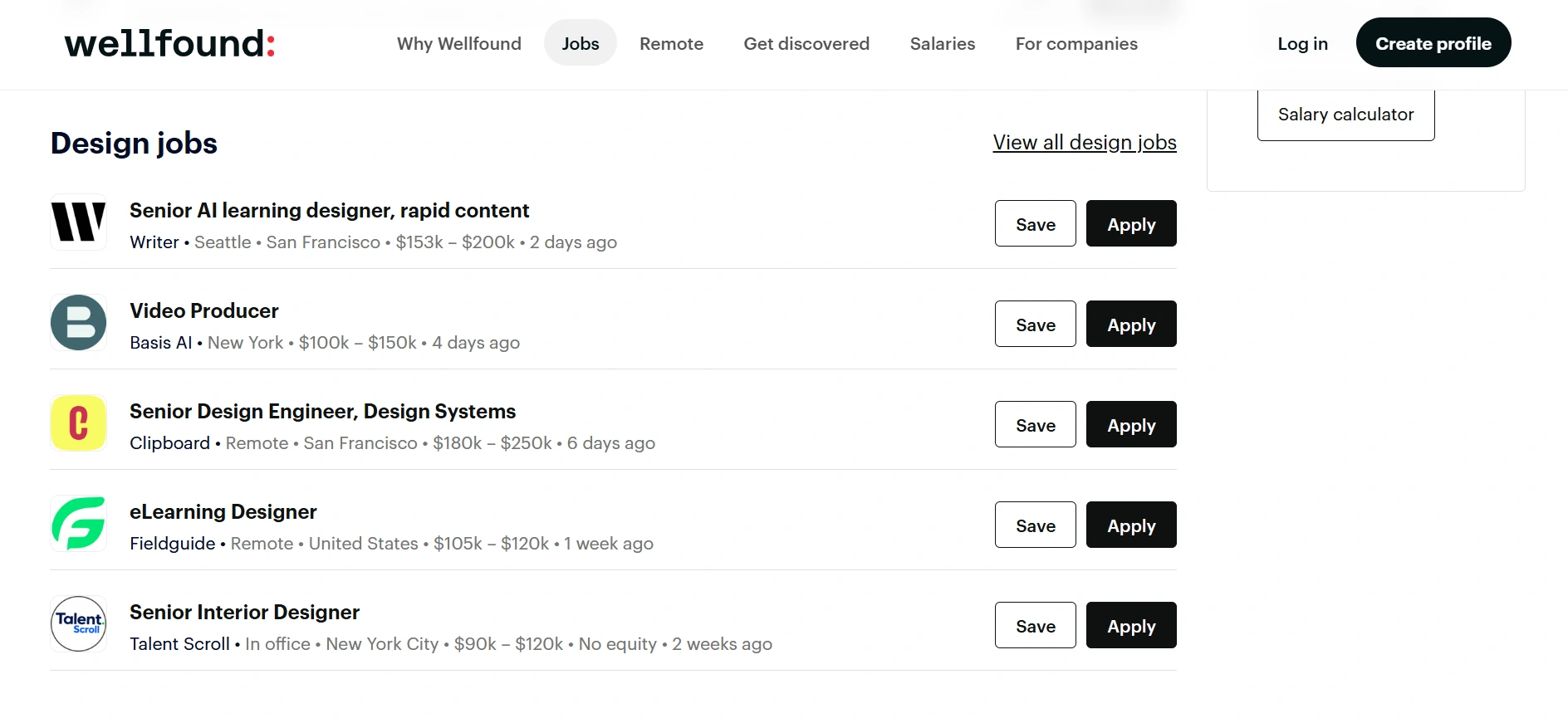
An early-stage company with five to fifteen employees typically needs a website, content, social media management, graphic design, development support, customer service help, and marketing work. They often cannot afford or do not yet need full-time hires for all of these. That gap is where freelancers come in.
Rather than searching only for job listings labelled “freelance,” look through Wellfound for growing companies in industries you have knowledge about. Identify businesses that clearly need the service you offer based on their current website, content presence, or job board activity. Approach them directly through LinkedIn or their website contact page with a specific, targeted proposal.
Best for: Freelancers interested in working with startups and companies in their early growth phases.
9. Remote OK
Remote OK is a remote work job board rather than a pure freelancing marketplace. Many listings are for full-time or part-time remote employment rather than project-based freelance contracts.
The reason it belongs on this list is that remote job boards increasingly carry contract, project-based, and part-time listings alongside traditional employment roles. For a freelancer who is open to longer-term remote contracts, a three-month project with a single client can provide more stable income than constantly sourcing individual jobs.
Browsing Remote OK with a filter toward “contract” and “part-time” reveals opportunities that sit between traditional freelancing and employment. These longer engagements also tend to pay higher effective rates because the client is getting more reliability than a one-off hire provides.
Best for: Freelancers looking for longer-term remote contracts rather than short individual projects.
10. Direct Outreach to Businesses
This last one isn’t a platform. That’s exactly why it’s worth including.
You can find clients yourself by identifying businesses that could benefit from your service and contacting them directly.
For example, suppose you’re a freelance content writer.
You could search for small businesses with:
- An outdated blog
- No blog at all
- Poor website copy
- Inconsistent social media content
- Product pages that need better descriptions
Instead of waiting for those businesses to post a freelance job, you can contact them with a specific suggestion.
This approach takes more work because you’re responsible for finding the prospect and starting the conversation. But it also means you’re not competing with dozens or hundreds of freelancers on the same job posting.
Best for: Freelancers who are comfortable with prospecting and building direct client relationships.
Recommended Reading:
📌Best Places to Find Freelance Writing Jobs.
📌How to Use AI to Start Freelancing Faster as a Complete Beginner
Which Platform Should You Start With?
You don’t need to create accounts on every freelance platform you find. In fact, spreading yourself across 10 platforms can make it harder to do any of them properly.
A better approach is to choose one or two places that match your service.
For example:
| Your Situation | Places to Consider |
|---|---|
| Complete beginner | Upwork, Fiverr |
| Writer | Upwork, LinkedIn, Fiverr |
| Graphic designer | Fiverr, Contra, LinkedIn |
| Web developer | Upwork, Contra, LinkedIn |
| Virtual assistant | Upwork, Fiverr, LinkedIn |
| Experienced professional | Toptal, Contra, LinkedIn |
| Startup-focused freelancer | Wellfound, LinkedIn |
| Looking for remote contracts | Remote OK, LinkedIn |
| Comfortable with sales | Direct outreach, LinkedIn |
The important thing is to remember that finding a platform isn’t the same thing as finding clients.
Your profile, portfolio, proposals, communication, and ability to solve a client’s specific problem all affect whether someone decides to work with you.
And if you’re starting from zero, don’t wait until you have a perfect portfolio before looking for work. Create a few strong samples, choose a specific service, and start putting yourself in front of potential clients.
That’s how freelancing starts becoming an actual income stream rather than just another profile sitting online.
Recommended Reading: Freelancing Mistakes Beginners Make (And Exactly How to Fix Them)
Key Takeaways
- The platform is the starting point, not the strategy. Profile quality, proposal specificity, and portfolio evidence determine whether clients hire you. The platform just determines who sees you.
- Upwork and Fiverr suit most beginners because both have active client bases and clear structures for getting started without an existing reputation.
- LinkedIn is the most underused freelancing tool for beginner and experienced freelancers alike. The clients are there. Most freelancers are not approaching it with the right strategy.
- Direct outreach produces the best clients when done with genuine specificity. It is uncomfortable and requires more initiative, but it creates client relationships rather than just transactions.
Conclusion
You don’t need accounts on every freelancing platform you’ve heard of.
You need a specific service, a profile that communicates it clearly, and two or three platforms where your target clients already are. Focus your energy there rather than spreading thin across everything.
The first client is the hardest part. Once that first review or testimonial exists, the next one comes more easily. And the one after that more easily still.
Pick one platform from this list today based on your service and your situation. Set up your profile properly. Send your first proposal or Gig before the week ends.
The freelancing income doesn’t start when the profile is perfect. It starts when you actually put yourself in front of someone who needs what you can do.
Frequently Asked Questions
Which freelancing platform is best for complete beginners with no portfolio?
Upwork and Fiverr are the most practical starting points for beginners with no existing reviews or portfolio. Upwork allows you to apply for smaller projects specifically, which lets you build a track record incrementally. Fiverr lets you create a service listing immediately and promote it through your personal network to get initial orders without waiting for the platform’s search algorithm to surface your Gig. Both are free to join and both have enough active client volume that a beginner with a specific, well-described service can land work within the first few weeks of consistent effort.
Is direct outreach actually better than using a freelancing platform?
It depends on what you mean by better. Direct outreach produces fewer responses per message sent because you are contacting businesses that have not asked to hear from anyone. But the clients who respond tend to be higher quality, faster to convert, and more likely to become long-term relationships because you chose them specifically rather than competing for them alongside other freelancers. For someone comfortable with the rejection that comes from cold contact, direct outreach consistently produces better clients over time than platform-based applications. Most experienced freelancers use both.
How many freelancing platforms should a beginner use at once?
Two at most when starting out. The common mistake is spreading a limited amount of time and energy across five or six platforms and producing a thin, unconvincing presence on all of them. Two platforms used properly, meaning a complete profile, specific service description, relevant portfolio samples, and consistent daily or weekly outreach activity, produce significantly better results than six platforms used sporadically. Add a third platform only after the first two are producing at least occasional paid work.
Why does LinkedIn keep coming up as a freelancing platform when it’s a professional network?
Because the distinction matters less than most people assume. LinkedIn is where the people who make hiring decisions spend professional time. Marketing managers, founders, content directors, and agency owners are all active on the platform. Many of them need freelance help and are not actively posting a job to find it. A freelancer with a strong profile and a consistent content presence becomes visible to those decision-makers in a way that a platform job application never does. LinkedIn does not immediately produce clients for most beginners, but it builds the professional presence that makes every other platform and outreach effort more effective.
What should a beginner do before applying to any freelancing platform?
Create two to three portfolio samples that specifically demonstrate the type of work you want to be hired for. These do not need to be previous client work. A writer can create sample blog posts in their target niche. A designer can create sample brand identity work for a fictional company. A virtual assistant can document a sample workflow they have designed for managing email or scheduling. These samples exist before the first client because a portfolio demonstrating capability converts better than a profile that explains capability without showing it.