How to Start a Blog and Make Your First $100 Online (A Realistic Guide)

Want to know how to start a blog and actually make money? Here is a realistic step-by-step guide to launching your blog and earning your first $100.
I remember the day I decided to start a blog.
I was relaxing in my small office setup in the corner of my apartment, staring at my laptop, trying to figure out what blogging really is. I had no idea what to write. I wasn’t sure anyone would read it, and I definitely didn’t think I would ever make money from it.
But I wanted to try.
I had read all the success stories from people like Ryan Robinson, Michelle Schroeder-Gardner, and many others, people making thousands of dollars a month. Quitting their jobs and traveling the world. I wanted that, but I also knew those people did not get there overnight.
So I decided to start small, one post, then another, then another.
The first few months were quiet. I would check my stats and see five visitors, then ten, then twenty. It felt slow, but something was happening. People were starting to find my words.
Then one day, it happened. I made my first dollar.
It was not a lot, but it was enough to prove that this whole blogging thing could actually work.
That first dollar led to my first hundred. And that first hundred led to more.
I am telling you this because I want you to know that I started exactly where you are right now, without any experience, audience, or clue.
If I can do it, you can do it.
This guide is not about becoming a famous blogger overnight. It is about taking the first step. Writing your first post, making your first dollar, and building something that can grow into more.
Let me show you how.
Why Start a Blog in 2026?
I get this question a lot.
People say, “Does anyone even read blogs anymore? Is it all just TikTok and YouTube now?”
I understand why you would ask. It feels like everyone is making videos these days. Blogs seem old-fashioned. Like something people did ten years ago.
But here is what I have come to realize.
Blogs are not dead. They have just changed.
People still search for answers every single day. They type questions into Google. How to fix a leaky faucet, what to pack for a beach vacation, which running shoes are best for flat feet, how to train a puppy not to bite, and so on…
Google does not show TikTok videos for those searches. It shows blog posts, articles, guides, and reviews.
When you write a blog post that answers someone’s question, you show up right when they need help. And when they trust your answer, they keep coming back.
The other reason I love blogging is ownership.
On YouTube, you do not own your channel. On Instagram, you do not own your followers. The platform can change the rules, shadowban you, or shut you down tomorrow. It happens all the time.
But your blog is yours. You own the domain, the content, and the email list you build from it. No algorithm decides who sees your work.
That freedom matters. Especially if you want to build something that lasts.
And here is the best part. Blogging works with the other things you do. You can start a YouTube channel and link to your blog. You can share your blog posts on social media. You can turn your blog posts into a newsletter. Everything works together.
So no, blogs are not dead. They are just more valuable than ever. Because in a world of short videos and disappearing stories, people still crave something they can read, save, and trust.
A blog gives you that.
How to Start a Blog in Four Simple Steps

When I first started, I spent weeks reading tutorials and watching videos. I thought I needed to understand everything before I could begin. I did not. I just needed to take the first step.
Let me save you all that time and confusion. Here is exactly how to start a blog, broken into four simple steps.
Step 1: Pick a niche
Your niche is the topic you write about. Think of it as your corner of the internet.
The mistake I see most beginners make is trying to cover everything. They write about food one day, travel the next, and fashion after that. It feels productive because they are busy, but it does not work. Readers get confused. Google does not know what you are about.
Pick one topic. Something you actually care about. Something you could talk about for hours. Because you will be writing about it for months.
Here are some examples. Instead of “food,” try “easy meals for busy parents.” Instead of “travel,” try “budget travel for families.” Instead of “fitness,” try “strength training for women over forty.”
The more specific you get, the easier it becomes to stand out.
Step 2: Choose a platform
A platform is where your blog lives. It’s like choosing where to build your house.
WordPress.org is what most serious bloggers use. It gives you full control. You own your content. You can add any feature you want. You can monetize however you like.
The other option is free platforms like Blogger.com, Medium, or Substack. They are great for testing your niche without spending money. But you do not own your audience there. If the platform changes its rules or shuts down, your work goes with it.
If you are serious about building something long-term, I recommend WordPress.org.
Step 3: Set up your blog
This is where people get stuck. They think setting up a blog is complicated. It is not.
You need two things. A domain name, which is your website address, like yourblog.com. And hosting, which is where your blog lives on the internet.
For hosting, I recommend Hostinger if you are just starting. It is very affordable, easy to use, and they install WordPress for you with one click. I used Hostinger for my first blog, and I still use it. It made everything simple.
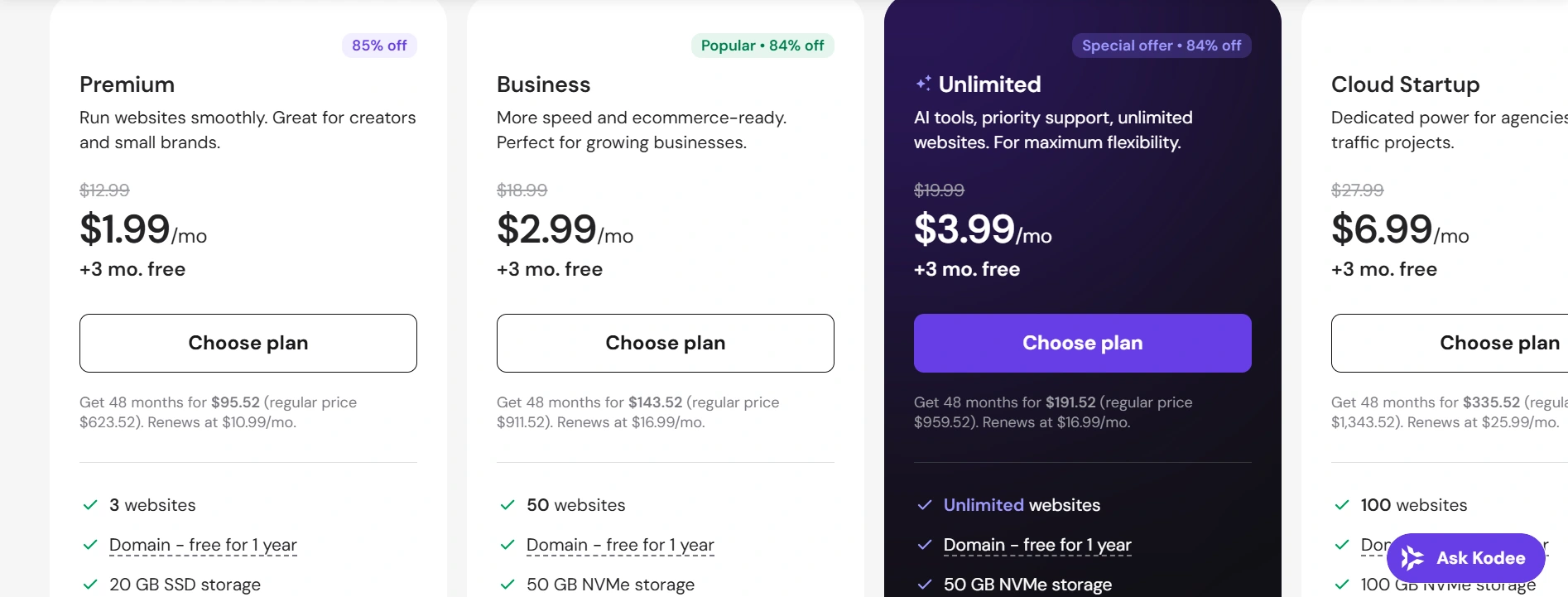
I also recommend WPX Hosting as another solid alternative. It offers fast loading speeds and handles higher traffic well, which helps keep your site running smoothly. Many bloggers trust it for its reliable performance and quick customer support.
Most hosting companies cost between $5 to $15 a month. That is the only money you need to spend.
Once you have hosting, pick a simple theme like Kadence. Do not spend weeks tweaking colors and fonts. A clean, readable design is all you need. Your content matters more than how pretty your site looks.
Step 4: Write your first post
This is the fun part. And the scary part.
Your first post does not need to be perfect. It just needs to help someone.
This might be a question people in your niche ask. Maybe it is “How do I start meal prepping?” or “What gear do I need for hiking?” or “How do I teach my dog to sit?”
Answer that question clearly. Use simple language. Break it into sections so it is easy to read. Add a photo or two if it helps. Then hit publish.
That is it.
You have started a blog.
Do not worry if no one reads it at first. That is normal. Every blogger starts with zero readers. The important thing is that you started.
Now you do it again. And again. And again. That is how a blog grows.
How to Make Your First $100
This is the part everyone wants to know about.
You started your blog and wrote a few posts. Now you are wondering when the money will show up. I really understand that feeling. Checking your stats every day, waiting for something to happen.
Honestly, money doesn’t just appear. You have to make it easy for people to pay you, and that’s where things start moving.
There are three main ways bloggers make money. Let me walk you through each one.
1. Affiliate marketing
This is usually the fastest way to make your first hundred dollars.
Affiliate marketing is when you recommend a product and include a special link. When someone buys through your link, the company pays you a commission. You do not need a huge audience. You just need one person who trusts your recommendation enough to buy.
The key is promoting products you actually use and believe in. Write honest reviews. Share what you love and what you do not love. Compare similar products and help people decide.
I made my first affiliate sale about two months in. It was for a software tool I had been using. I wrote a simple review, shared it on Pinterest, and someone bought. That first sale was only twenty dollars, but it proved the model worked.
Look for affiliate programs in your niche. Amazon Associates is easy to join. ShareASale and CJ Affiliate have thousands of programs. Some companies run their own programs. Search for “[your niche] affiliate program” and see what comes up.
Recommended Reading: How to Earn Extra Income Online with Affiliate Marketing (Step-by-Step Guide)
2. Display ads
This is when companies pay to place ads on your blog. You earn money every time someone sees or clicks an ad.
The main thing here is that ad networks usually require a certain amount of traffic before they accept you. Mediavine and AdThrive, two of the best networks, typically want 50k or 100k monthly sessions. That takes time to build.
For your first hundred dollars, affiliate marketing is usually faster. But once your traffic grows, ads become a steady source of passive income. You do nothing. The ads just run, and the money shows up.
3. Selling your own products
This is my favorite method because you keep all the profit.
You create something once and sell it over and over. It might be a PDF guide, a printable planner, a set of templates, or a short e-book. Something simple that helps your readers solve a problem.
The beauty of this is that you do not need a massive audience. If you have a hundred readers who trust you, some of them will buy a five or ten dollar product. That gets you to your first hundred quickly.
Start small. Do not try to build a giant course; just make a simple PDF. Sell it on Amazon KDP, PayHip, Gumroad, or Etsy. See what happens. You can always create more products later.
How to reach that first hundred
Here is a realistic path to your first hundred dollars.
Pick one monetization method and focus on it. Affiliate marketing is usually the simplest starting point.
Write content that naturally includes affiliate links. Reviews work well. So do comparison posts and “best of” lists. Answer questions people are asking and recommend products that solve their problems.
Share your content on Pinterest and in online communities where your readers hang out. Be helpful. Do not spam links. The sales come when people trust you, not when you shout at them.
It might take a few months. That is normal. But once you make that first hundred, you know it is real. And that confidence carries you to the next hundred.
How to Get Traffic Without Spending Money
You can have the best blog in the world. But if no one reads it, you will not make a dollar.
In my first few months, I wrote post after post and checked my stats. Five visitors, then ten, then back to three. It felt like shouting into an empty room.
Then I figured out how to bring people in without paying for ads.
Let me share what worked.
Write for search engines
Google sends free traffic to blogs that answer questions well. But you cannot just write about anything and hope people find you. You need to target what people are actually searching for.
This is where keyword research comes in. Instead of writing a post called “Coffee Makers,” you write “Best Coffee Maker for Small Kitchens Under $100.” That specific phrase is what someone types when they are ready to buy. And because it is specific, there is less competition.
When I started doing this, my traffic slowly climbed. A post I wrote targeting a long-tail keyword kept bringing in readers month after month. I did not pay for that traffic once.
If you want to do keyword research properly, Semrush is a tool that helps. You can see what people are searching for, how hard it would be to rank, and what your competitors are ranking for. It saves a lot of guesswork. There is a free version to get started, and the paid version gives you more depth when you are ready.
Use Pinterest
Most people think Pinterest is just for recipes and wedding ideas. But it is actually a search engine. People go there to plan and shop.
I started using Pinterest early on, and it made a big difference. You create simple pins using Canva, link them to your blog posts, and let Pinterest send you traffic. Unlike Instagram or TikTok, a pin can keep bringing visitors months after you posted it.
The key is making pins that stand out. Bright colors. Clear text. A title that makes people want to click. Pin your posts consistently, and the traffic will come.
Share your content
Do not wait for people to find you. Go where they already are.
Join Facebook groups in your niche. Participate in Reddit communities. Answer questions on Quora. The rule is simple: be helpful first. Share your link only when it genuinely answers someone’s question.
If you just drop links and leave, people ignore you. But if you show up, answer questions, and build a reputation as someone who knows what they are talking about, people will click through to your blog.
Write consistently
This might sound simple, but it is the hardest part.
One post does not bring traffic. Twenty posts might bring a little. Fifty posts can bring steady traffic. Eventually, one hundred posts can turn into something significant.
In the same way, each post is like a net you cast into the internet. Some nets catch nothing. Some catch a few readers. A few nets catch hundreds or even thousands. You do not know which ones will work until you cast them.
Because of that, keep writing. Keep publishing. Keep learning what your readers want. Traffic builds slowly at first. Then it speeds up as your library of content grows.
A note on patience
Traffic takes time. Google does not rank new blogs overnight. It takes months for search engines to trust you and send visitors.
If you are getting five visitors a day in month one, that is normal. If you are getting fifty a day in month six, you are on the right track. If you keep going, those numbers grow.
The people who succeed are not the ones who get lucky. They are the ones who keep publishing while everyone else quits.
A Realistic Timeline for Your First $100
I want to be honest with you about how long this takes.
When I first started, I thought I would make money within weeks. I saw stories online of people making thousands in their first month. I assumed that would be me.
It was not.
My first few months were quiet. I wrote posts, no one read them. I kept writing. A few people found me. I kept writing. Then one day, I made my first sale.
That first hundred dollars took me about five months. Some people get there faster while some take longer. The timeline depends on your niche, how consistently you publish, and a little bit of luck.
Let me give you a realistic picture of what those first months might look like.
Month One: Setting Up and Learning
This month is about getting started. You pick your niche, set up your blog, and write your first few posts.
Do not expect traffic yet, do not expect money. Your goal is simply to learn how to write, how to format your posts, and how to feel comfortable publishing.
If you publish four to six posts this month, you are doing great. Most people never make it past this stage. Just getting started puts you ahead.
Month Two to Three: Finding Your Rhythm
Now you have a few posts under your belt. You start sharing them on Pinterest and maybe in online communities. A few readers trickle in. Maybe ten or twenty people visit your blog this month.
You keep writing. Maybe another four to six posts. You start to understand what your readers like. A post about one topic gets more views than another. You make a mental note and write more like that.
You might make your first affiliate sale here. Maybe ten dollars, maybe twenty. It feels small, but it matters. It proves this can work.
Month Four to Six: Building Momentum
This is where things start to shift. Your older posts have been sitting on Google for a few months. Some of them start ranking. Traffic grows from twenty visitors a month to a hundred, then two hundred.
You have a small library of content now. Fifteen or twenty posts. Some posts get almost no views. A few bring in steady traffic. You double down on what is working.
This is when most bloggers make their first hundred dollars. An affiliate sale here. Another there. Maybe someone buys a small digital product you created. It adds up.
If you hit this milestone in month four, five, or six, you are right on track.
Month Six to Twelve: Growing
Once you have a foundation, the growth starts to feel real. Traffic climbs and income becomes more consistent. Maybe you make your first two hundred, then five hundred.
Your older posts keep bringing in traffic while you work on new ones. You start to see which topics resonate and you create more content around them. You might join an ad network or create your first real product.
This is when blogging starts to feel less like a hobby and more like a business.
Why Some People Get There Faster
A few things can speed up the timeline.
A niche with less competition means you rank faster. If you pick a narrow topic, you can show up on Google sooner than someone who picks a broad, crowded niche.
Existing skills help. If you already know how to write, design pins, or do keyword research, you move faster. If you are learning as you go, that is fine too. It just takes a little longer.
Consistency is the biggest factor. Someone who publishes twice a week will get there faster than someone who publishes twice a month. The math is simple. More posts mean more chances to be found.
Why It Is Okay If You Take Longer
If you are six months in and have not made your first hundred, you are not failing.
Some niches take longer. Some topics need more time to rank. Some audiences are smaller but more loyal. The timeline I shared is an average. Some people take a year to hit that first hundred. Then they hit their next hundred in a month. Then their next in a week.
The key is to keep going. Most people quit in month two or three because nothing is happening. They never get to see what month six looks like.
Do not be most people. Keep writing. Keep helping. The first hundred is coming.
Here is the Conclusion written with your natural voice, simple grammar, and a helpful tone that is not too wordy.
Conclusion
We covered a lot in this guide.
How to Start a Blog and Make Your First $100. You walked through the four steps to start your blog. You learned how to make your first hundred dollars through affiliate marketing, ads, or your own products. You figured out how to get traffic without spending money. And you got a realistic timeline so you know what to expect.
Now here is what I want you to take away.
Starting a blog is not complicated. You do not need to be a writer. You do not need to be an expert. You just need to start.
The first few months will be quiet. That is normal. Most people quit because nothing happens fast enough. Do not be most people.
Keep showing up, keep helping people, and keep learning as you go.
The first hundred dollars is the hardest. It feels impossible until it happens. But once you make that first sale, everything changes. You know it is real and you can do it. And that confidence carries you to the next hundred, and the next.
You have everything you need to start. A voice. A perspective. A willingness to help.
Now go write your first post. The readers will come. The money will follow. But only if you start.
Frequently Asked Question About How to Start a Blog and Make Your First $100 Online
How much does it cost to start a blog?
You can start a blog for free using platforms like Medium or Substack. If you want your own website with WordPress.org, the cost is typically five to fifteen dollars per month for hosting and a domain name. Hostinger offers affordable plans for beginners, while WPX Hosting is a faster option for when your traffic grows. There are no other required costs. Many successful bloggers started with just hosting and a domain.
How long does it take to make money from a blog?
Most bloggers make their first money within three to six months of consistent publishing. The first hundred dollars usually takes around four to six months for beginners who publish regularly. Some niches rank faster and generate income sooner. Others take longer. The key factor is consistency. Bloggers who publish once or twice a week typically reach their first earnings faster than those who publish less often.
Do I need to be a good writer to start a blog?
No, you do not need to be a good writer to start a blog. You need to be clear, helpful, and able to communicate in a way that your readers understand. Writing like you talk works well. Keep sentences short. Use simple words. Focus on answering questions and solving problems. Writing improves with practice. Many successful bloggers started with no writing experience and got better over time.
How do bloggers get traffic without paying for ads?
Bloggers get free traffic primarily through search engines and Pinterest. Writing posts that target specific long-tail keywords helps Google find your content and show it to people searching for answers. Pinterest acts as a visual search engine where users discover blog posts through pins. Tools like Semrush help bloggers find keywords with less competition so they can rank faster. Consistent publishing and sharing content in online communities also bring free traffic over time.
What is the best way to make my first $100 from blogging?
Affiliate marketing is usually the fastest way to make your first hundred dollars from a blog. Write honest reviews, comparison posts, and helpful guides that include affiliate links to products you trust. Share those posts on Pinterest and in relevant online communities. Once you have built trust with your readers, selling a simple digital product like a PDF guide or template can also generate quick earnings. Focus on one monetization method rather than trying to do everything at once.